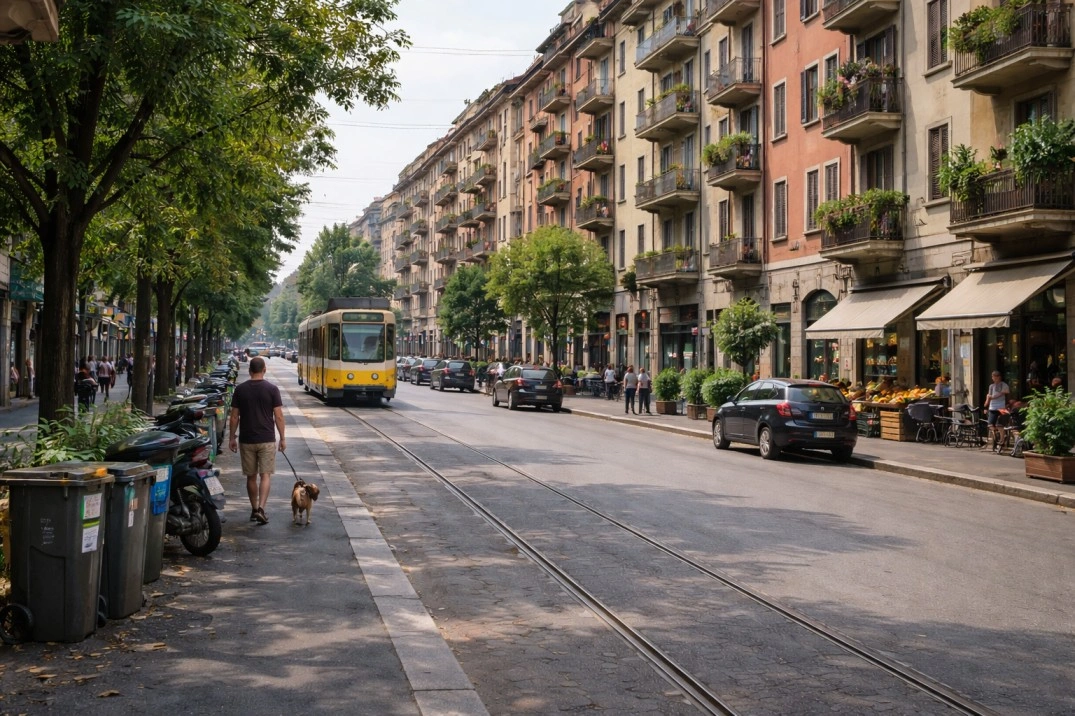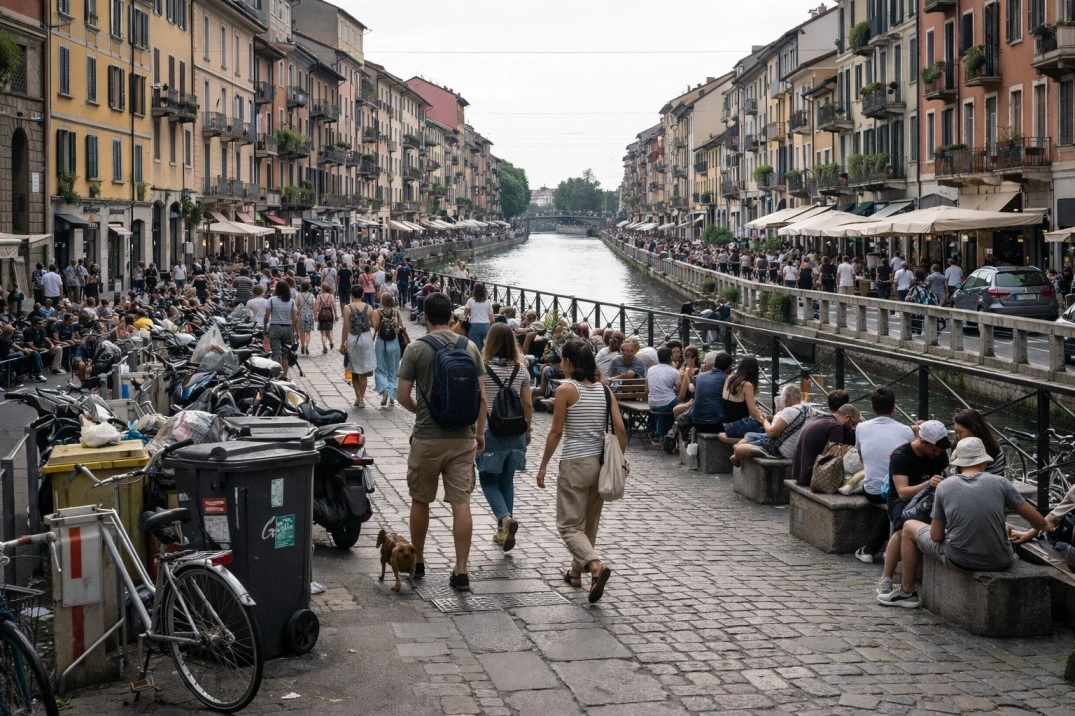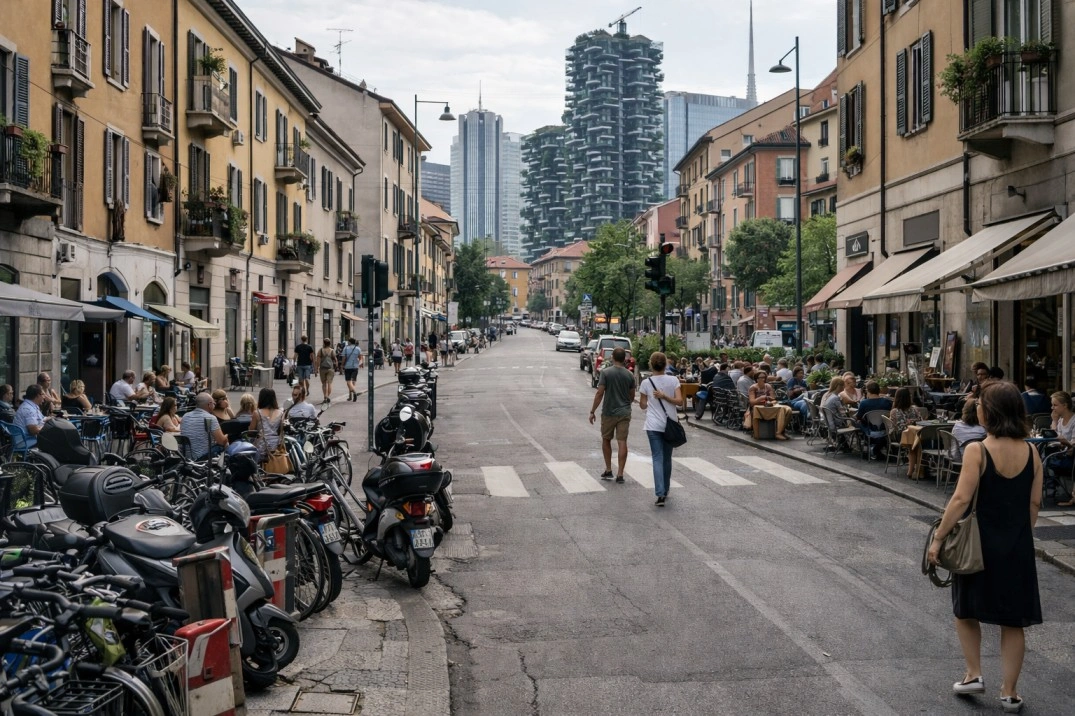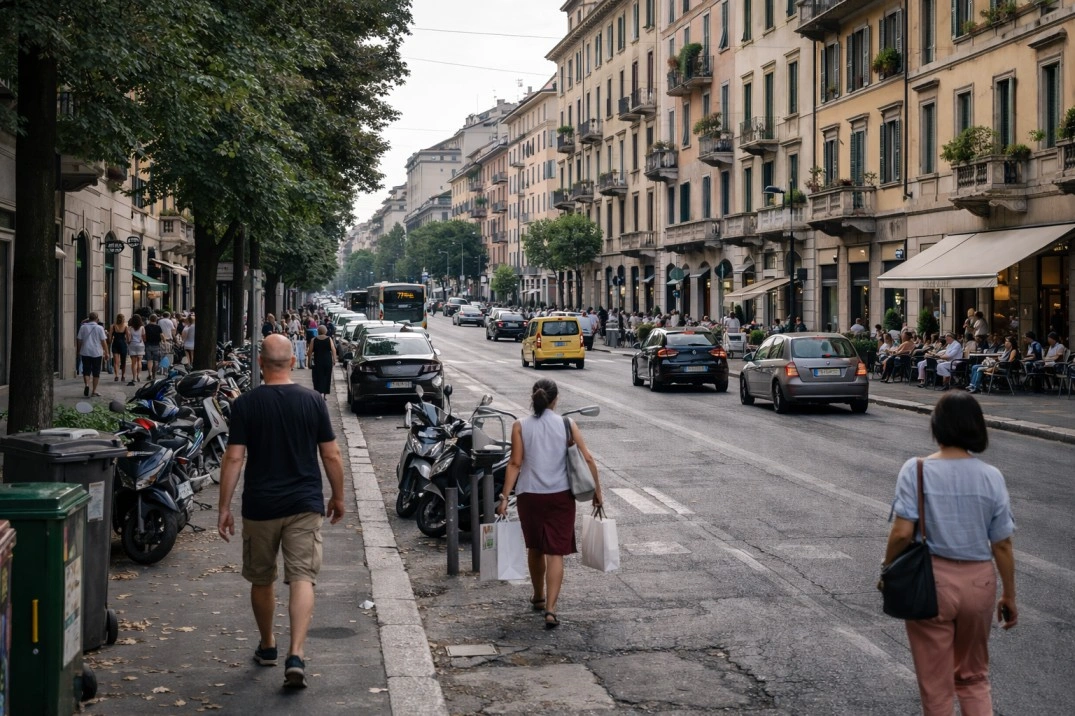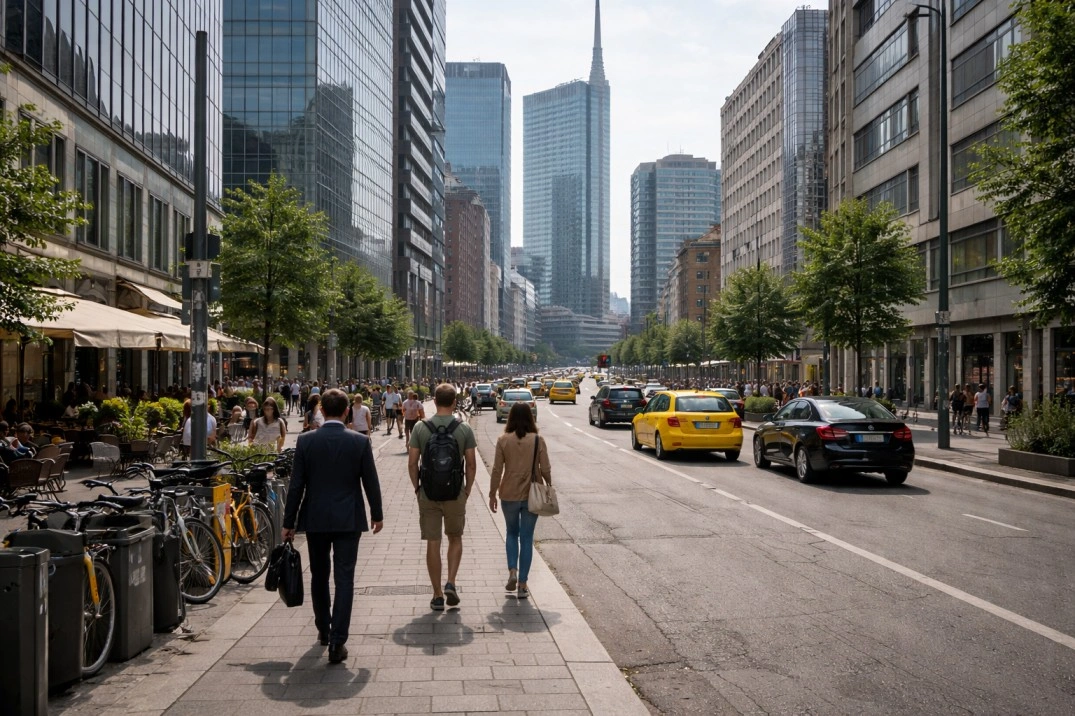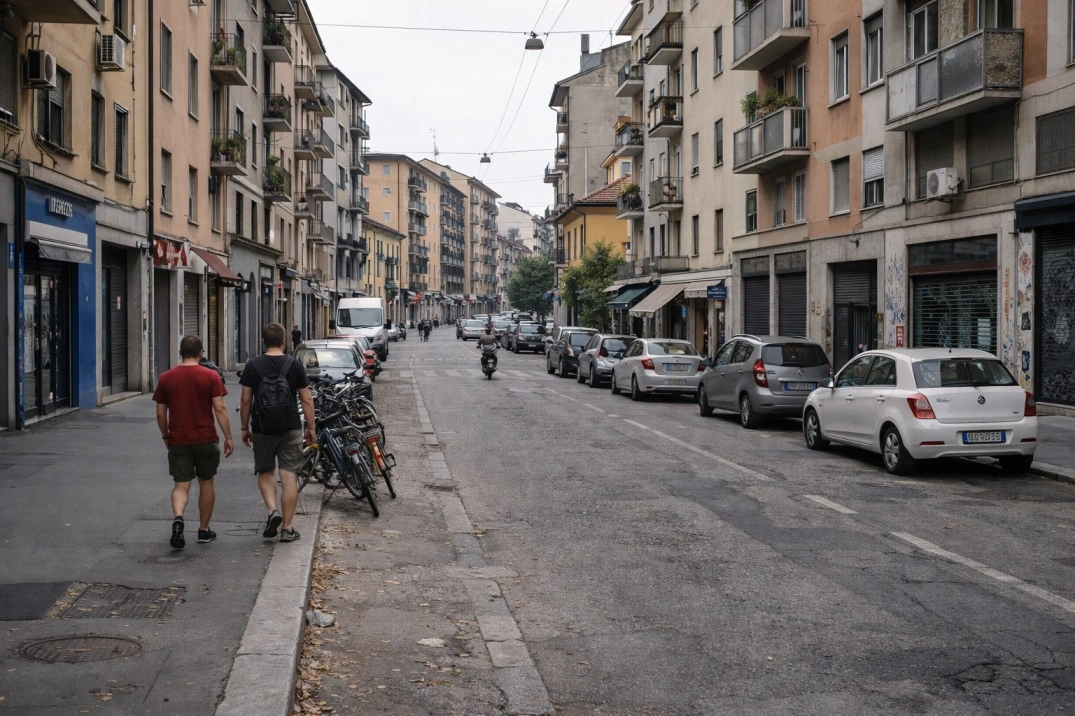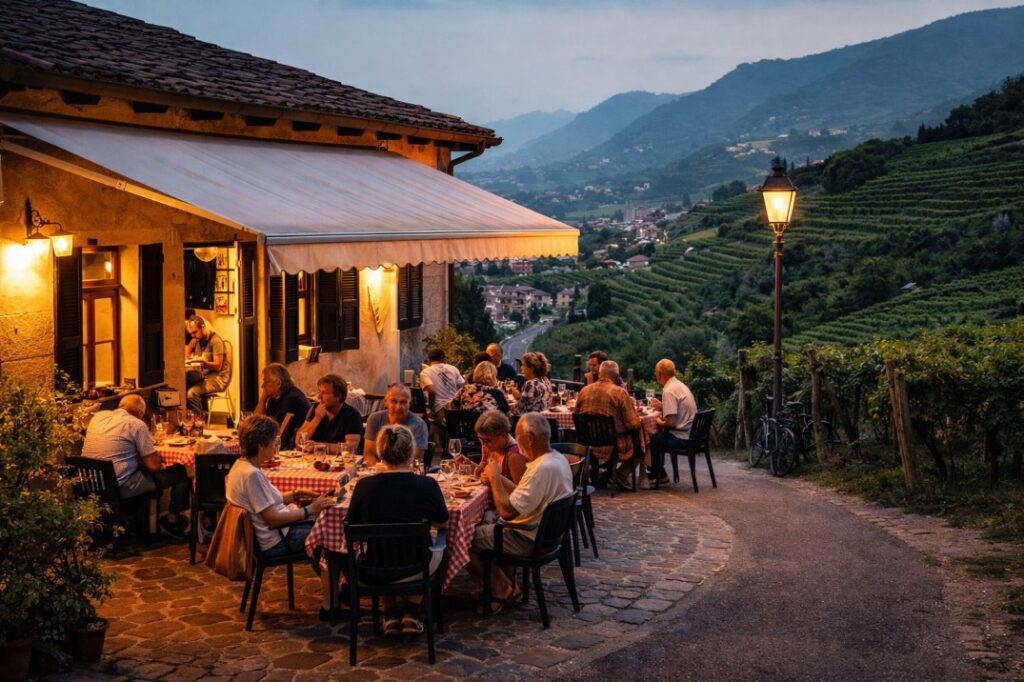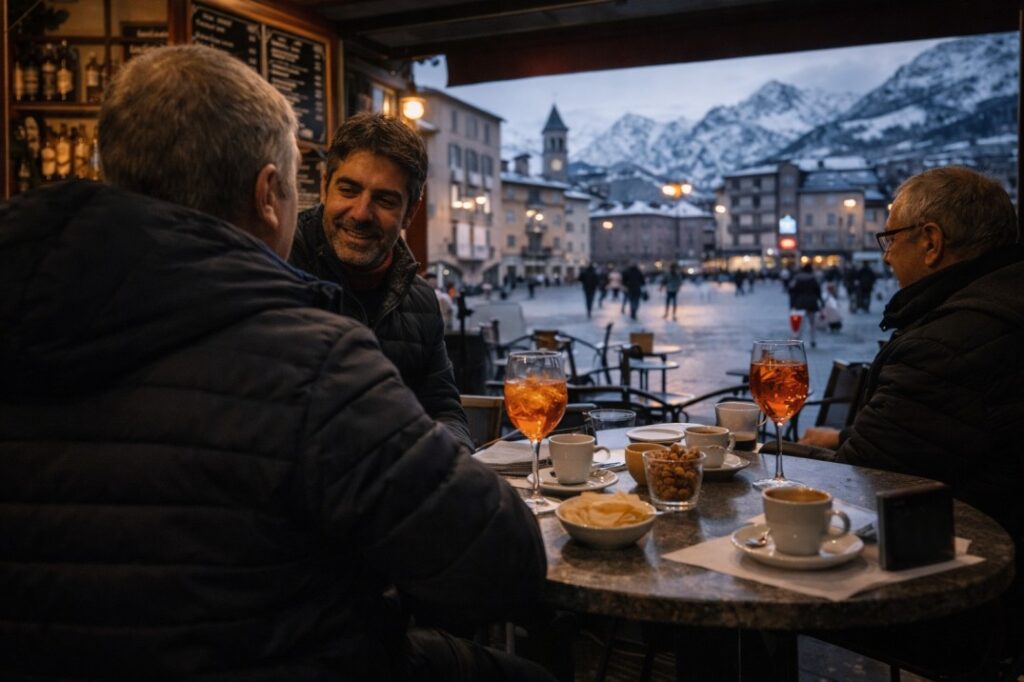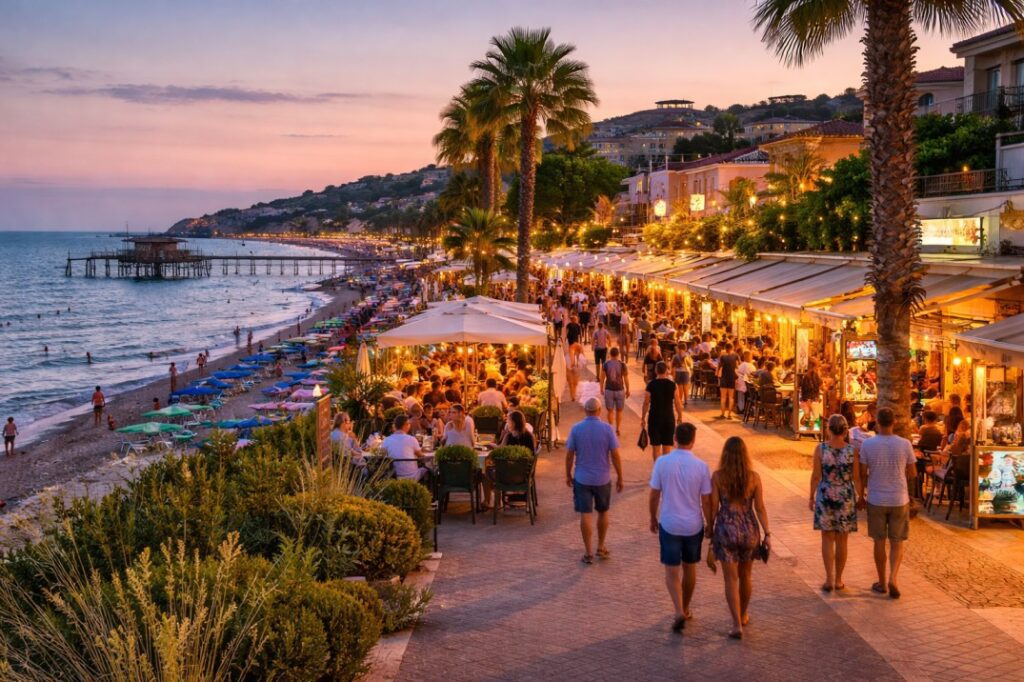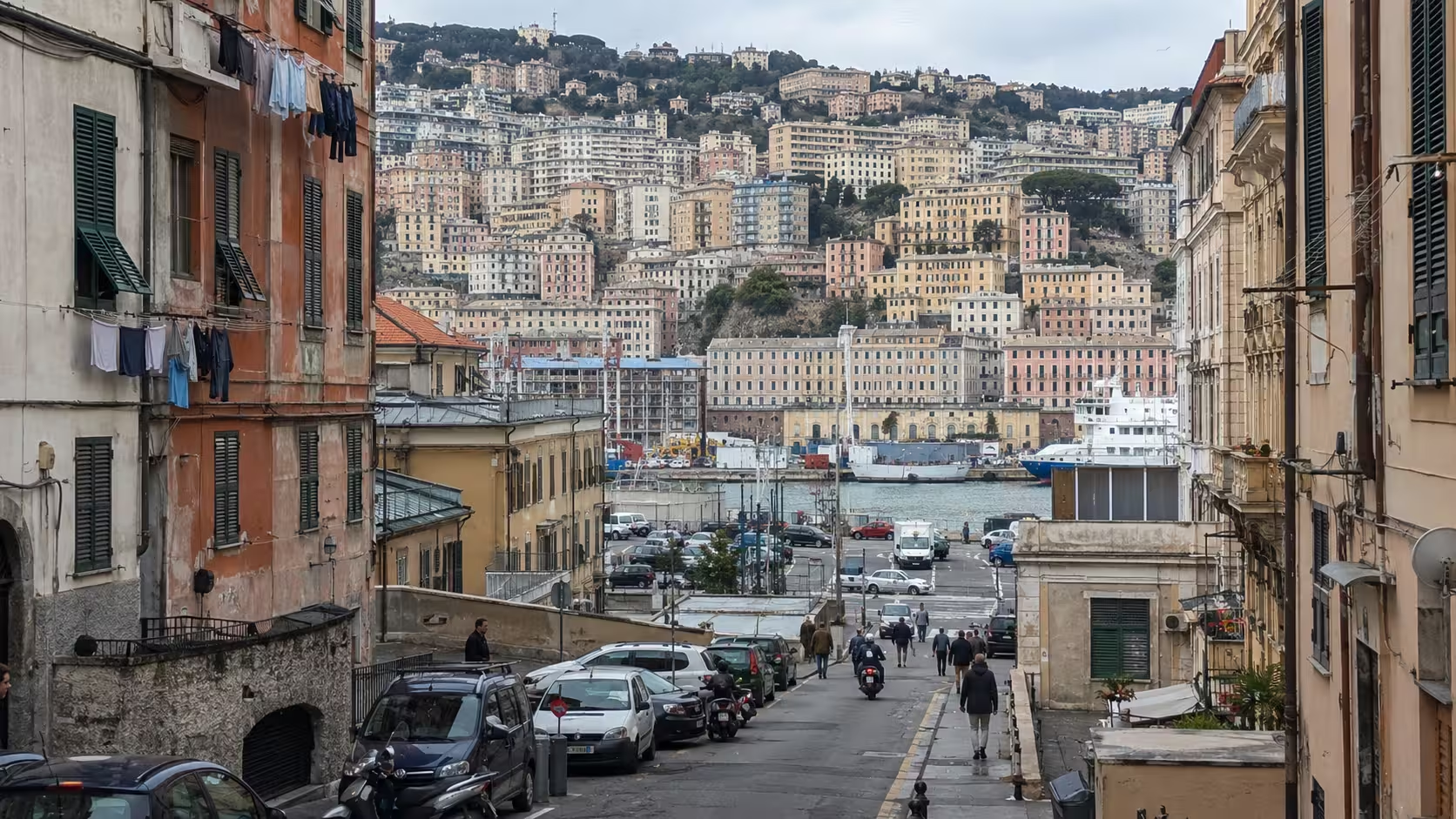
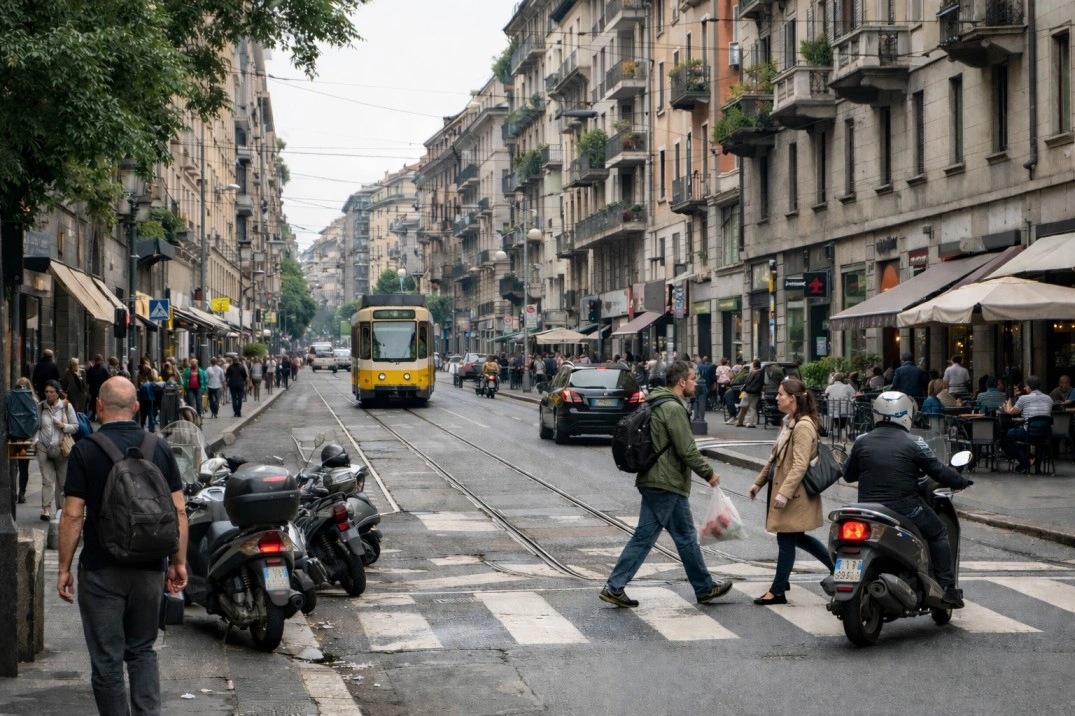
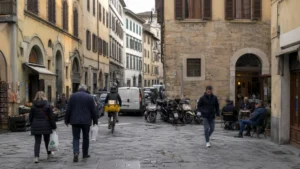
Living in Milan, Italy – weekday street scene with trams, pedestrians, and dense urban movement

Living in Milan

Living in Milan means faster work routines, tighter housing choices, and a city where metro reach often matters more than neighborhood charm.

Living in Milan works differently from most Italian cities because the city is organized around employment, movement, and price pressure rather than visual ease. Its role as Lombardia’s economic center pulls people, companies, and services into a dense urban grid where transport access and neighborhood cost shape daily decisions quickly. That creates a city with strong internal logic: efficient in practical terms, but less forgiving if housing, budget, or commute distance are misjudged at the start.

Compared with cities where daily life spreads more loosely, Milan compresses routines into shorter radiuses and sharper trade-offs. Where to live in Milan often matters more than the flat itself, because the wrong location can add crowding, noise, and friction to every workday. Central districts give speed but raise housing pressure fast, while outer areas lower entry cost but make the city feel more functional than generous. The practical signal is simple: proximity buys time here, and time is rarely cheap.

Living in Milan means living inside a dense, work-led urban system with strong transport, coworking, and regional access. The advantage is daily feasibility and speed. The trade-off is housing pressure, higher costs, and a city that rewards structured routines more than relaxed, low-friction living.

If Rome disperses energy across a larger, less predictable city, Milan concentrates it into a tighter, faster system where access, cost, and daily efficiency are harder to separate.

Is living in Milan for you?

Best For

Trade Offs

Seasonality

Dense · Structured · Demanding

Where to live in Milan
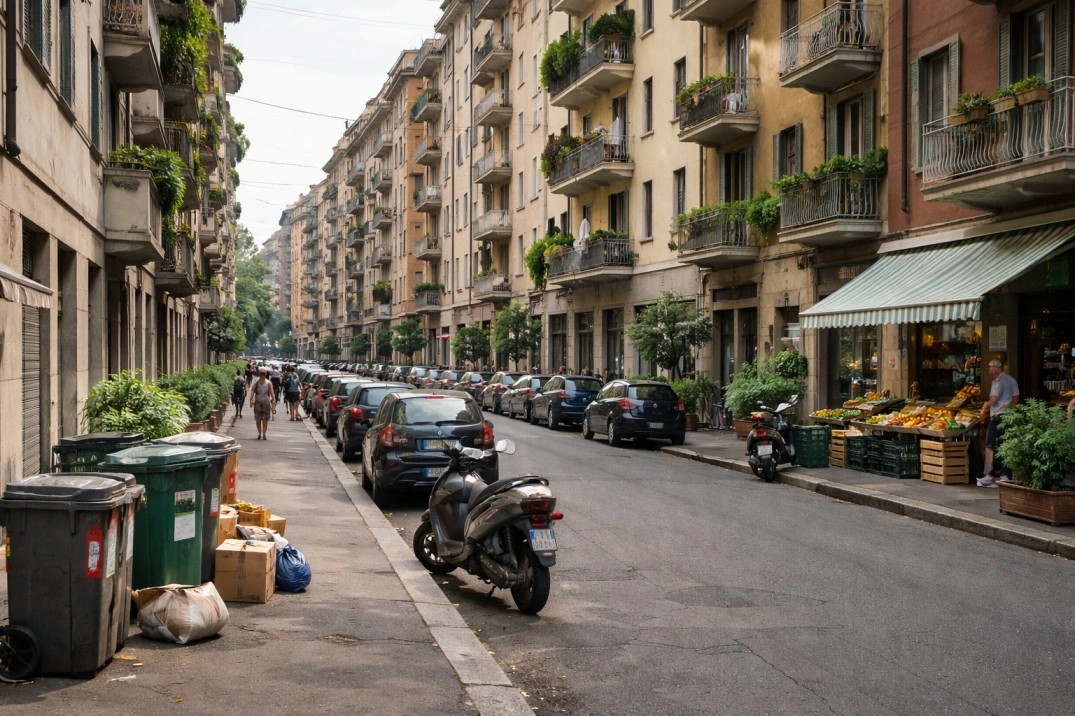
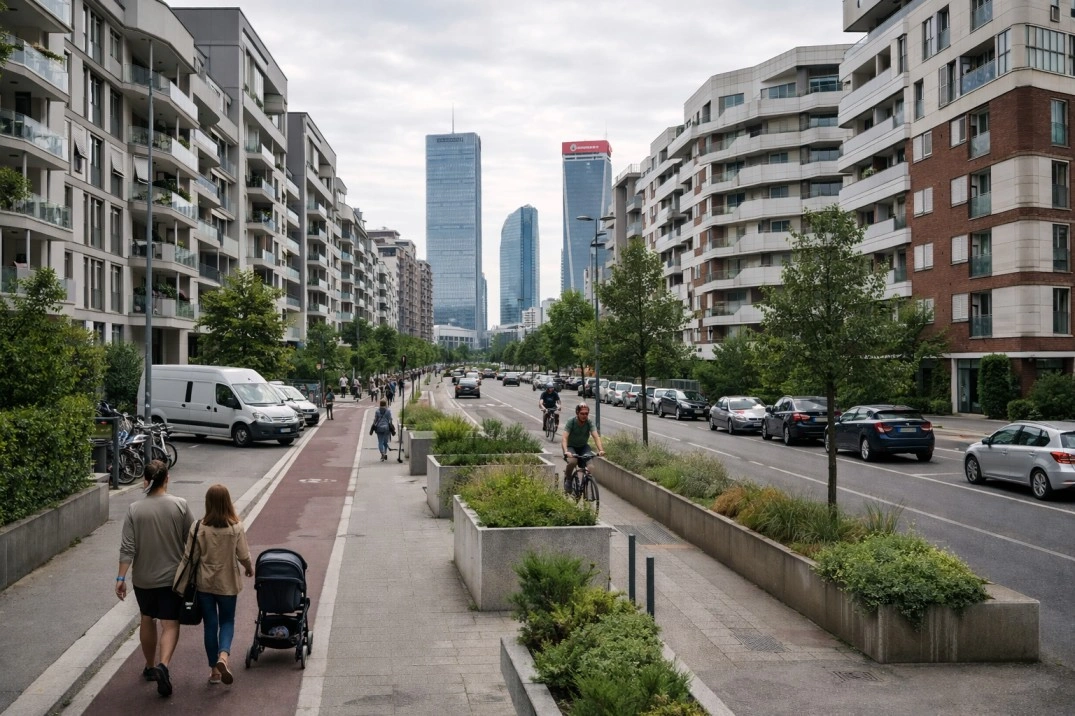
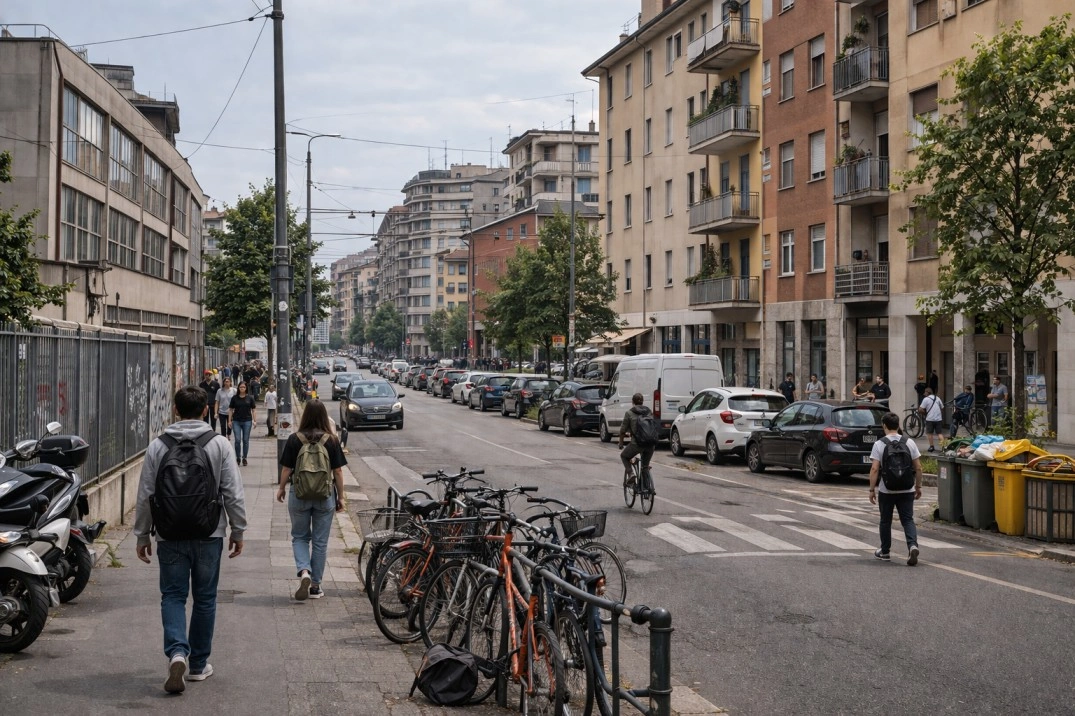
Where to live in Milan, Italy – residential street with apartment buildings and daily activity

Milan’s housing system is tight, fragmented, and harder to read than it first appears. Availability is not fluid, especially in central and semi-central districts, and visible listings often mix very different realities: furnished medium-term units, student-oriented stock, shared rooms, and standard rentals. Landlord behavior feels agency-heavy and inconsistent rather than straightforward, which makes comparison slow even before paperwork starts. The main friction is not only price; it is the combination of competition, uneven stock quality, extra monthly charges, and the fact that location changes daily life immediately. In Milan, neighborhood choice is a functional decision before it becomes an aesthetic one.

Average housing costs

Neighborhoods in Milan
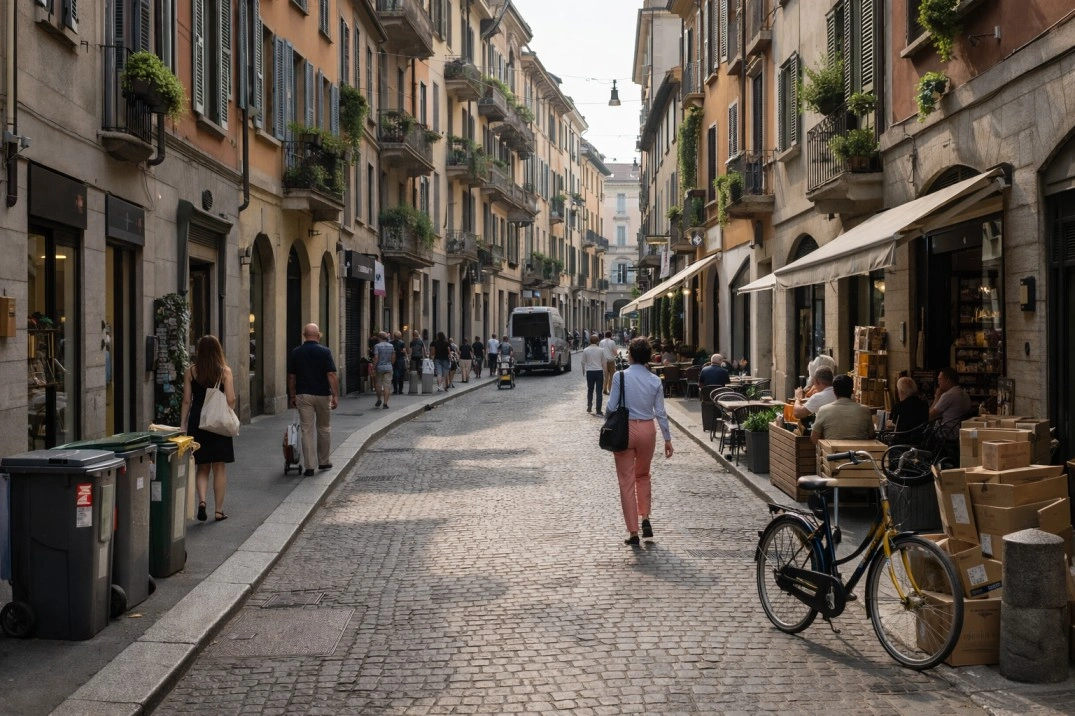
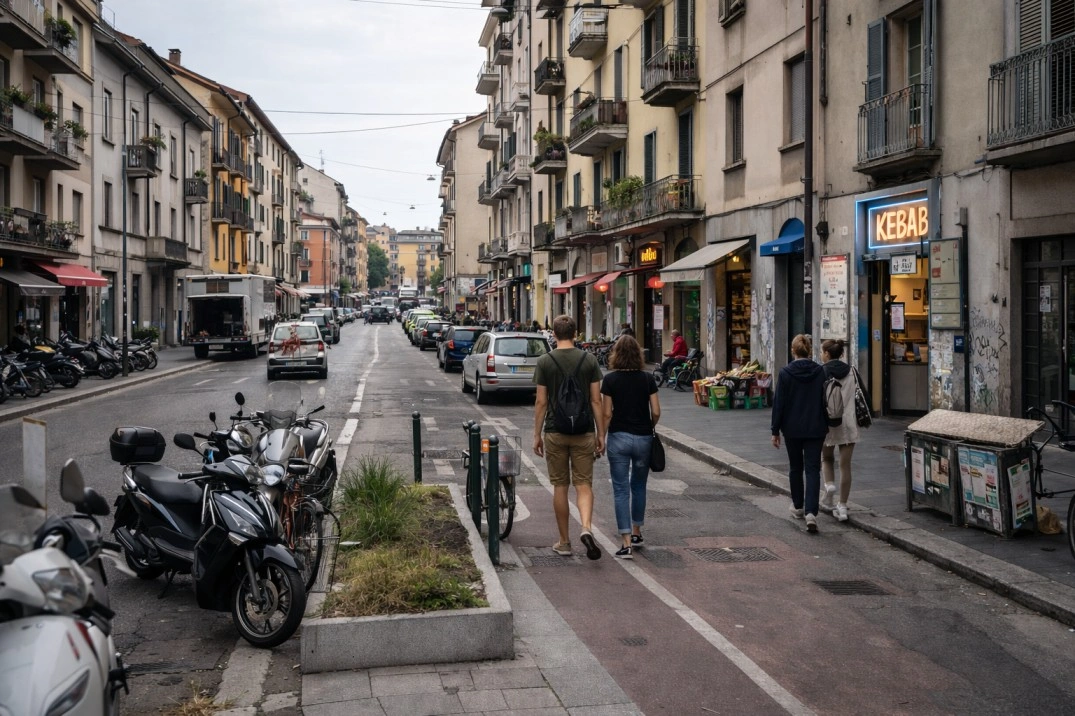
Brera in Milan, Italy – historic central street with pedestrians and everyday storefronts

Positioning

Brera sits inside the historic core and behaves like one of the city’s most polished central districts. Streets are walkable, services are close, and daily movement happens with little friction if budget is not the limiting factor. The rhythm is less chaotic than nightlife-heavy zones, but it is still dense, visible, and premium. Living here means paying for immediate access, heritage surroundings, and a version of Milan that feels refined rather than improvised.

Who's it for

People who want central immersion, prestige, and short daily distances, and who can absorb one of the city’s highest housing thresholds.

Cost Variation

Among the most expensive options in Milan, with pressure coming from both location and scarcity rather than from apartment size alone.

Price Pressure:

Transport Access:

Noise/Density:

Local Feel:

Daily Convenience:

Coliving in Milan

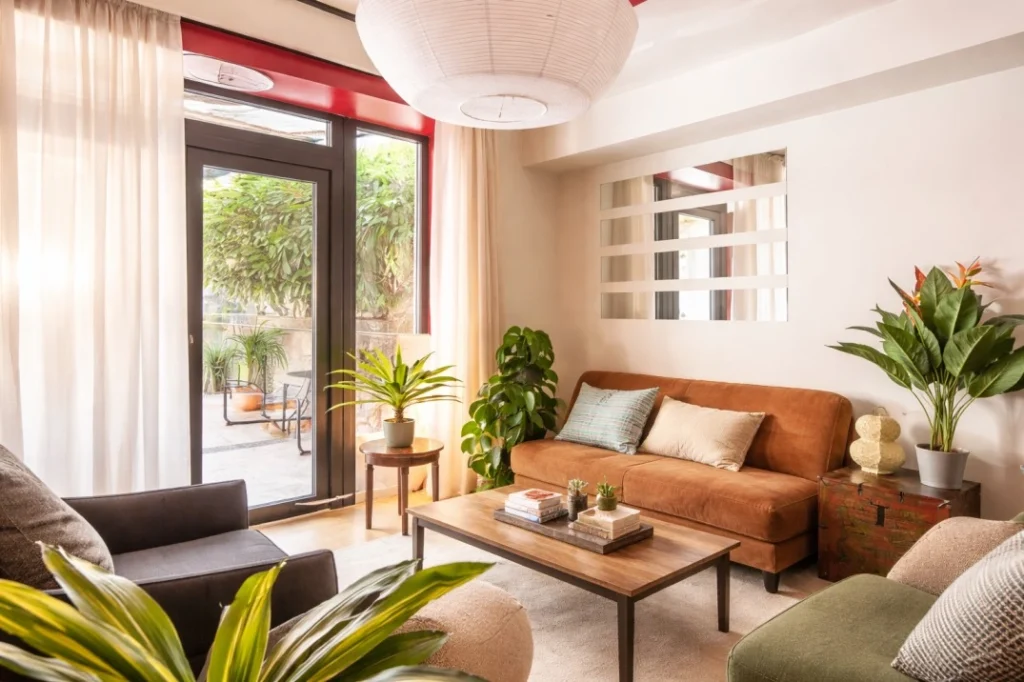
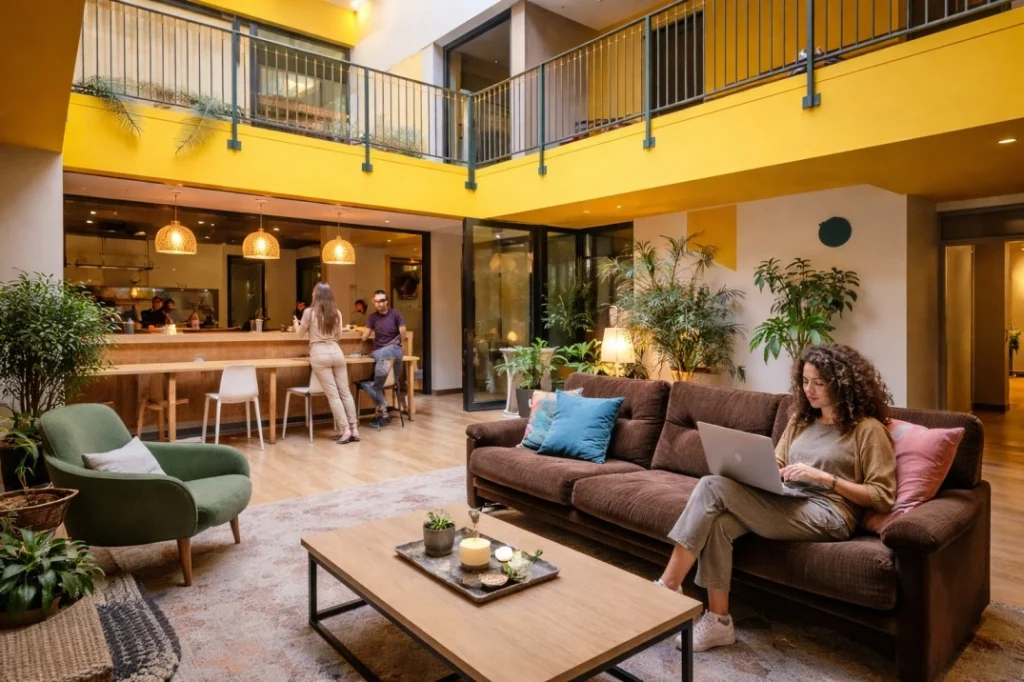
Coliving in Milan exists, but it should be treated as an emerging and still fragmented option rather than a mature, city-defining system. The format is mostly urban, with supply tied to city-based housing and hybrid living setups rather than retreat-style environments. That means there are usable options, but the market does not yet behave like a dense, fully structured coliving ecosystem. For many people, Milan still requires assembling the experience through housing, work, and social layers rather than finding it fully packaged.

Growing Options

Mostly City-Based

Expensive

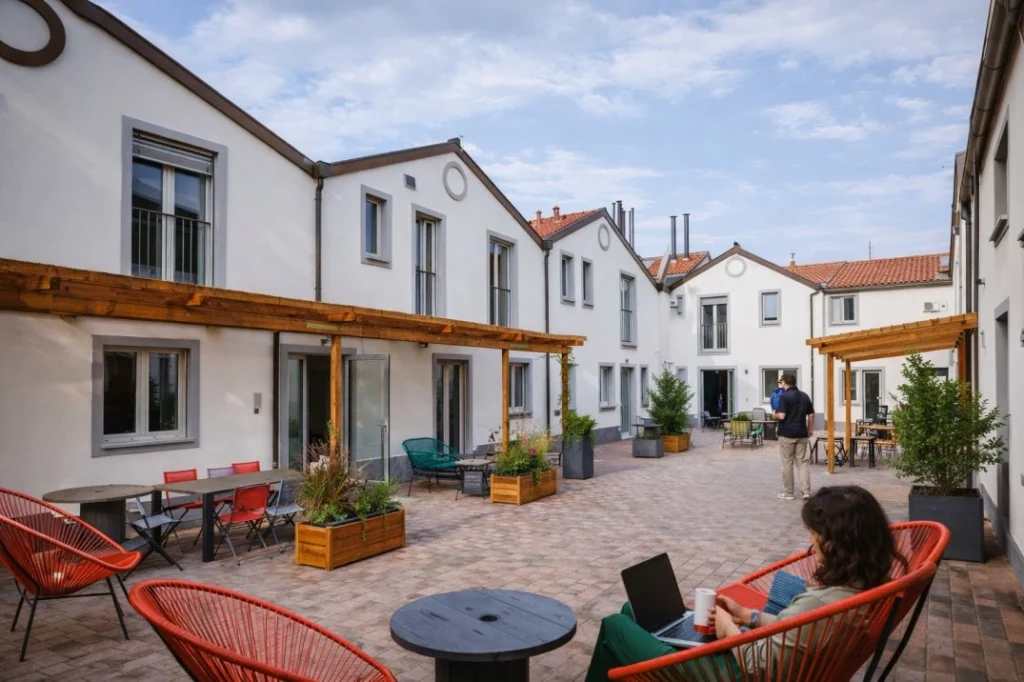
Coliving spaces in and around Milan
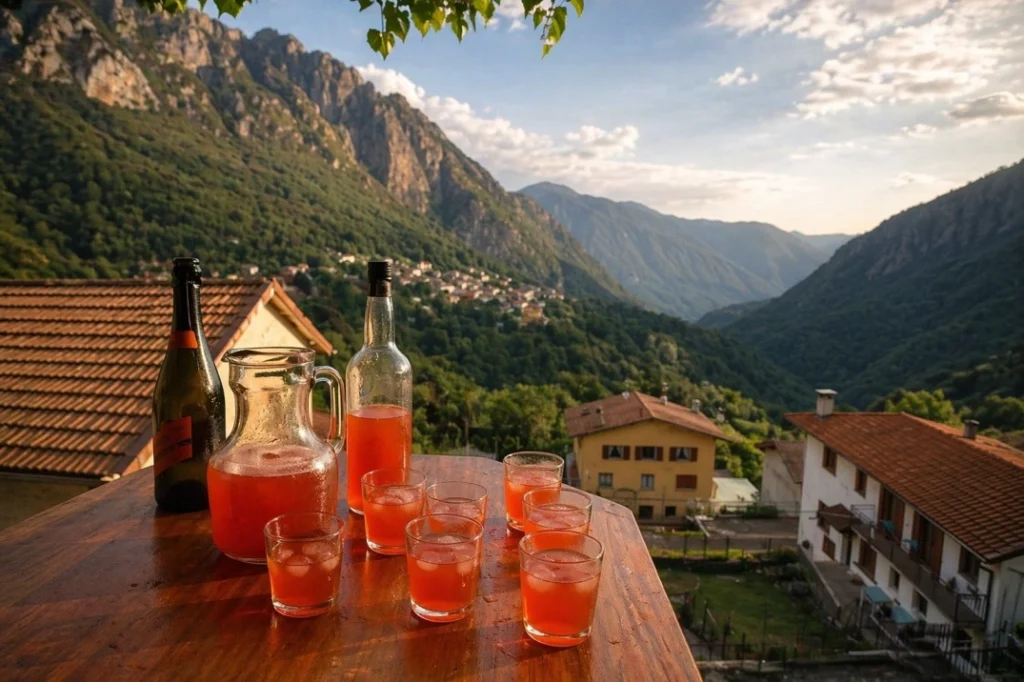
The useful question is not whether inventory exists, but whether it matches the kind of routine, privacy, and work setup needed for a real stay.

How people actually live in Milan

When dedicated supply is limited, people in Milan usually build the system themselves. That means finding a workable neighborhood first, then pairing it with paid work infrastructure and a social routine that repeats often enough to hold. Shared rentals, serviced apartments, and furnished medium-term stock become practical substitutes, especially in districts with good transport. The weakness is that nothing guarantees cohesion: living, working, and connecting may all function, but they do not automatically connect into one seamless setup.

LIVE

Where you live

Shared flats and serviced stock fill the gap when formal coliving supply stays uneven.

Housing works, but listing types are mixed and comparison takes time. The friction is not only price; it is clarity, availability, and contract logic.

WORK

Where you work

Coworking and structured work routines often replace the built-in work layer coliving usually provides.

This part is feasible in Milan, but it adds cost. People relying only on cafés get a weaker system than those paying for workspace.

CONNECT

Where you connect

Connection usually comes through repetition, district habits, and work-linked routines rather than housing alone.

Social life exists, but it is fragmented by neighborhood and schedule. Without routine, the city can stay efficient without becoming socially coherent.

Coliving in Milan is usable when expectations stay realistic: the city supports the model, but often through assembled systems rather than a finished, low-friction product.

Working from Milan

Working from Milan, Italy – active coworking or café workspace with laptops and natural light

Working from Milan is highly feasible if the goal is structure rather than softness. The city moves quickly, districts stay dense, and daily rhythms are shaped by commutes, appointments, and business activity more than by relaxed street spillover. That makes workdays easier to organize, but not necessarily calmer to inhabit. Noise and movement are part of the baseline in many central zones, so the city suits people who focus well inside active systems.

The infrastructure layer is stronger than the casual-work layer. WiFi should be read as generally reliable in work-oriented parts of the city, and coworking is a more dependable solution than cafés for longer sessions. Cafés can work, but they are not the safest assumption for all-day use, especially in central, high-traffic areas where seating turns over quickly. Milan solves work problems best through paid infrastructure, not through improvisation.

The best fit is someone who wants a city that keeps momentum high and decision friction low once the base is set. Milan works well when work is part of the reason for being there, because the city rewards routine, fast movement, and repeated use of formal infrastructure. It is weaker for people expecting slow café culture, low-noise environments, or housing and work to resolve themselves cheaply — works for structured professionals, not for soft-rhythm drifters.

Work Environment

Central work districts stay active, so quiet focus usually requires choosing the room, not the street.

Coworking Availability

Coworking is easier to rely on than cafés when full workdays need consistency.

WiFi Availability

WiFi is usually solid where Milan’s business infrastructure is strongest.

Coworking in Milan

Working from Milan makes sense for people who want speed and structure; less for anyone expecting low-cost, low-noise laptop living.

Community & Social Life

Community in Milan, Italy – small group talking at an informal shared table

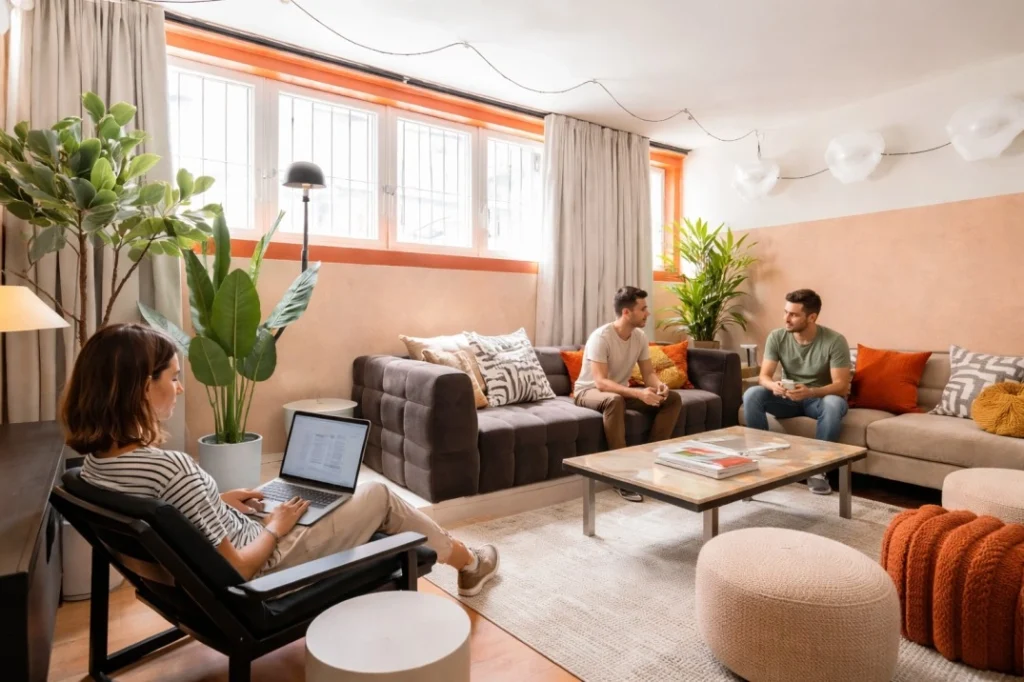
Connection in Milan tends to come from repetition rather than immediate openness. People usually meet through work contexts, shared routines, neighborhood habits, and places they return to consistently, not through a citywide feeling of softness. That makes community possible, especially because the city is dense and internationally connected, but it also means social life can stay fragmented if housing, work, and movement happen in separate parts of the map. The people who settle best are usually the ones who keep showing up in the same places long enough for the system to start recognizing them.

Milan can become socially solid, but usually after routine, repetition, and neighborhood fit do their work.

Beyond Milan: How far your day can stretch
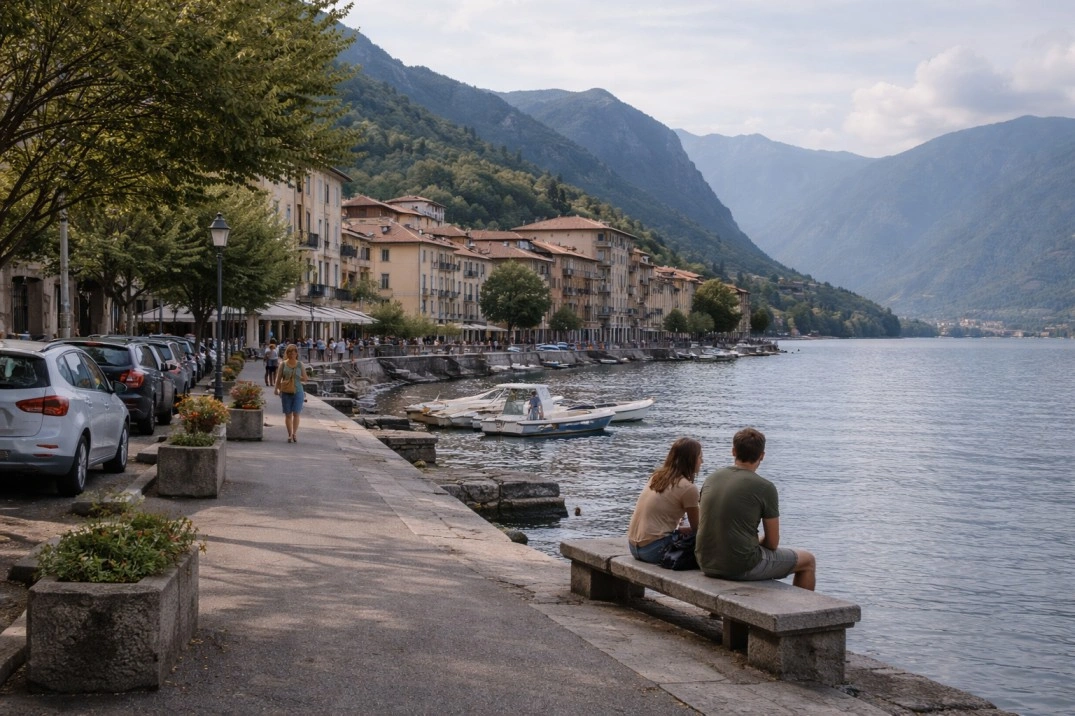
Beyond Milan, Italy – reachable nearby environment with slower pace and more open space

Milan works unusually well as a base because the city extends outward through rail and road almost as much as it functions inward. Lakes, mountain access, nearby towns, and major transport nodes are all close enough to shape the week rather than remain occasional excursions. That changes the meaning of staying here long term. The city can feel dense and work-heavy from Monday to Friday, but still allow quick resets that do not require a full travel day or a complete break in routine.

The constraint is variability. Train times are generally the most reliable part of the access layer, while bus links and some car timings are less clean in the data. Distance alone can also mislead: a place may be reachable, but not lightweight enough for a casual weekday decision. Milan stretches well when used through structured transport, not when every outward move is improvised.

Accessible from Milan

Accessible from Milan means more than weekend range. The city’s real advantage is that water, elevation, smaller towns, and transport nodes sit close enough to influence routine, housing decisions, and how constrained the week actually feels.

Water Access

Water access from Milan is not coastal, but it is practical enough to change how a week feels. Como, Lecco, and Varenna are close enough to function as real resets, especially by train. The useful point is not swimming fantasy or postcard scenery; it is that the city does not trap people inside its own density. When work stays heavy, the presence of nearby lake environments gives Milan a release valve that many large work-led cities simply do not have.

Milan’s water access matters because nearby lakes can interrupt the city’s density without needing a full travel day. That changes the week, not just the weekend.

50'

60'

90'

60'

55'

100'

130'

65'

150'

Elevation

Elevation access is one of Milan’s strongest compensations for its flat, urban intensity. Piani di Bobbio, Piani di Artavaggio, and even longer-distance options like Bormio make altitude part of the broader life system, not just a winter exception. The effect is practical: the week can shift from concrete, meetings, and metro movement to colder air, physical effort, and quieter terrain without changing base city. That gives Milan more recovery range than its street-level reality suggests.

Milan’s mountain access matters because the city’s flat, work-heavy rhythm can be interrupted by altitude within the same regional system.

90'

120'

150'

100'

125'

160'

40'

40'

40'

Nearby Towns

Nearby towns matter from Milan because they provide smaller-scale resets without requiring a full break from the city’s tempo. Pavia, Bergamo, and Brescia are useful not as sightseeing checklists, but as places where pace, street scale, and daily texture shift enough to register quickly. That makes them practical for people testing where to live longer term, or for residents who need regular exits from Milan’s concentration without abandoning the advantages that concentration provides.

The nearby-town layer matters because Milan gives access to smaller urban resets quickly, without forcing a full break from work or base.

50'

35'

80'

50'

65'

60'

100'

75'

120'

Transport Nodes

Milan’s outward connection layer is one of the strongest arguments for using it as a long-stay base. Malpensa, Linate, and Bergamo Airport extend the city into different travel logics: long-haul, short-haul, and lower-cost movement. That matters for people working across cities or splitting time across bases. The city is not only well connected in abstract terms; it reduces the practical cost of moving outward, which changes how viable multi-base living or frequent work travel becomes over time.

Milan works as a base because major airports stay close enough to support frequent moves, short work trips, and multi-city routines.

60'

55'

70'

35'

30'

25'

50'

-

55'

Milan works best as a base with strong edges: dense inside, but unusually capable of opening outward when used well.
FAQs

Is living in Milan good for remote workers?

Yes, living in Milan works well for remote workers who value structure, transport, and dependable work infrastructure. It works less well for people expecting cheap housing or effortless café-based routines. The city supports focused, repeatable workdays, but usually through good location choices and paid workspaces rather than through relaxed improvisation.

The cost of living in Milan is high by Italian standards, especially once rent is added. A realistic baseline puts a room around €650–€700, a studio around €1,100–€1,200, and groceries around €55–€70 per week. The city becomes much easier or harder depending on neighborhood choice and commute tolerance.

Affori, Bovisa, Bicocca, and Corvetto/Rogoredo are the clearest lower-pressure options. They reduce entry cost, but each comes with a more outer-city or compromise-based experience. Where to live in Milan depends on whether saving rent is worth giving up some central convenience, polish, or social density.

Coliving in Milan is real, but it is still fragmented rather than fully mature. The market is mostly urban and hybrid, with workable options but not a citywide, fully structured ecosystem. Many people still build the same outcome through shared rentals, serviced apartments, coworking, and neighborhood-based routine instead of relying on one integrated product.

Not immediately. Milan can become socially solid, but connection usually comes through repeated routines, work contexts, and neighborhood habits rather than instant openness. That means the city often rewards consistency more than spontaneity. People who keep returning to the same places usually integrate faster than people waiting for the city to do the work first.

Scroll to Top

What was missing?

Tell us what you expected to find, or what would have made this guide more useful.