
Living & Coliving in Marche
Italy’s “working middle”: polycentric towns, Adriatic normality, and an inland that still sets the rules.
Living in Marche for remote workers feels practical and low-drama: medium-sized towns, repeatable routines, and an Adriatic coast that supports daily rhythm. The main trade-off is dispersion — services cluster along the coast, while inland life offers focus but fewer spontaneous options.
Compared with Emilia-Romagna, Marche feels quieter and more self-sufficient, with fewer big-city spillovers.
Is Living in Marche for you?
Best For
- You want Italy without constant spectacle: everyday life runs on small-city competence rather than scene-chasing.
- You prefer “choose-your-distance” living: coast for rhythm, inland for space — without relocating regions.
- You work well in systems where predictability builds trust and visibility comes slowly.
Trade Offs
- East–west movement is slower than it looks; coast-to-Apennine crossings require planning.
- Social integration happens through circles — sports, associations, work — not open invitations.
- The region’s strengths are dispersed; rarely do you get sea, culture, services, and coworking in one place.
Seasonality
- Best: April–June, September–October — usable coast, structured days, balanced pace.
- Summers: Coastal compression; inland steadier but warmer.
- Winters: Inland quiet deepens; some coastal towns thin out noticeably.
Measured · Practical · Low-drama · Grounded
Living in Marche: Daily Life & Lifestyle
Marche runs on non-theatrical normality. There is no gravitational capital reorganizing the region around it; instead, daily life distributes across towns like Ancona, Jesi, Pesaro, Macerata, and Ascoli Piceno. Living in Marche means accepting that competence replaces spectacle: reliable schools, predictable shop hours, familiar faces, and follow-through without performance.
Evenings rarely default to improvisation. After work, movement narrows into repeatable loops — the same bar, the same sports hall, the same Adriatic lungomare, the same piazza circuit. It can appear uneventful until you recognize the design: low decision fatigue, stable social contact, minimal friction.
Belonging here is participation-based. Remote workers who float socially often feel invisible; those who attach to recurring anchors — a weekly class, volunteer group, language exchange, amateur team — become legible. In Marche, recognition accumulates slowly but durably.
Spatially, two operating systems coexist. The Adriatic corridor — Ancona to Pesaro to Civitanova — favors mobility and services. Inland, toward the Sibillini and hill towns, evenings close earlier and outings require purpose. Living in Marche is partly choosing which system shapes your week.
Remote Work Reality
Remote work in Marche is viable — but uneven.
Connectivity is solid in main towns and coastal hubs; reliability drops quickly in hill villages or scattered rural housing. Exact-address verification matters.
Coworking in Marche exists, particularly around Ancona, Jesi, and parts of the north coast, but distribution is thin inland. Many remote workers default to home setups.
Logistics favor the Adriatic line. Trains and regional buses prioritize coastal movement; cross-region or inland commuting costs time.
If you need spontaneous networking or high event frequency, Marche may feel structurally uninterested. It supports focus more than exposure.
Wi-Fi variability by address
Coworking clustered along the coast
Coastal-first transport logic
Need a reliable workspace during your stay?
For longer stays, cafés and apartment Wi-Fi are not always enough. Italy Coliving readers can access a partner workspace offer with 10% off coworking, day offices, meeting rooms, business lounges, and virtual office services.
Partner link. Italy Coliving may earn from qualifying enquiries.
Living in Marche supports concentrated remote work — provided you choose your base carefully.
Food & Culture
Marche is one of the clearest examples of food as a local contract: not for novelty, but for continuity and belonging. The social signal isn’t “where’s the hottest place,” it’s where your family goes, who knows the owner, and whether you’re the kind of person who returns. You’ll notice it in the pacing: meals are less performative than in some neighboring regions, and more tied to weekends, extended family, and seasonal micro-traditions that repeat with little announcement.
Culturally, Marche sits in a quieter register than its neighbors: less outward bravura than Romagna, less curated “aesthetic life” than parts of Tuscany/Umbria. The region’s pride often shows through competence — craft, work ethic, small business continuity — and through towns that keep doing what they do without needing external validation. Living in Marche means adapting to a culture that values repetition over reinvention.
Iconic food you’ll encounter in Marche
Nature & Weekend Escapes
When living in Marche, nature is both backdrop and boundary. The coastline gives you easy repetition — sea walks, quick swims, that “weekday nature” you can touch without planning. But the inland is a different proposition: the Sibillini and Apennine landscapes are not casual decoration; they change temperature, distance, and your willingness to improvise. Nature here isn’t always “escape.” Sometimes it’s the reason your plan needs to be earlier, simpler, or more intentional.
A practical cue: weekends don’t automatically mean leaving. Many locals treat Sunday as a contained system — a predictable meal, a short walk, a family circuit. If you want bigger landscapes, you choose them deliberately: a day in the Sibillini, a loop through hill towns, a long coastal walk when summer pressure makes everything feel busy later.
Within easy reach when living in Marche:
Monte Conero: cliff-and-pine coastline that feels “western” on an Adriatic map
Parco Nazionale dei Monti Sibillini: altitude, weather swings, serious quiet
Gole del Furlo: contained wilderness, easy to reach from the north
Frasassi area: limestone landscape that changes the feel of the interior
Marche gives you “daily nature” on the coast — and “earned nature” inland; your fit depends on which one you need.
Places in Marche
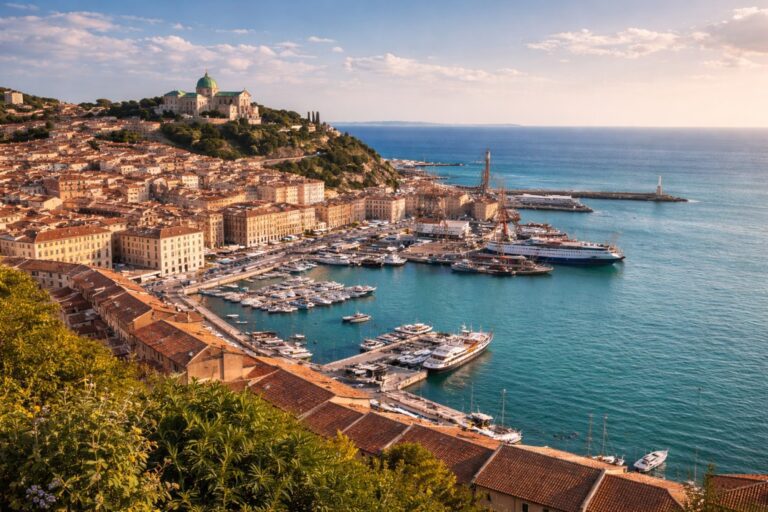
Ancona
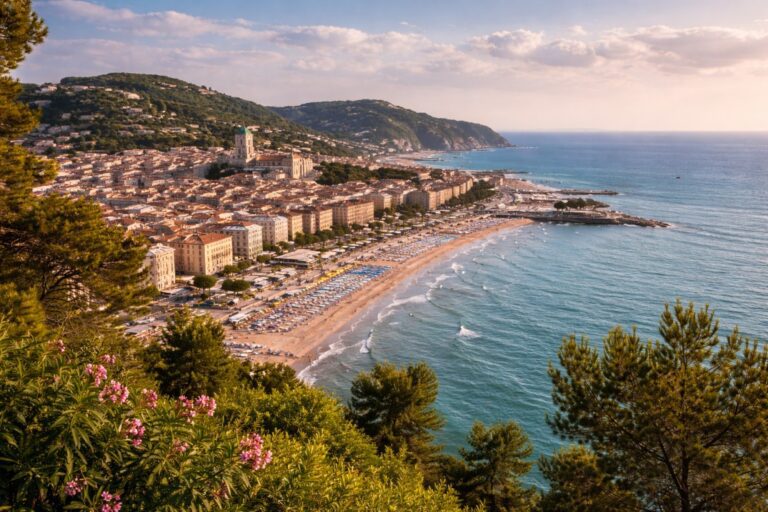
Pesaro
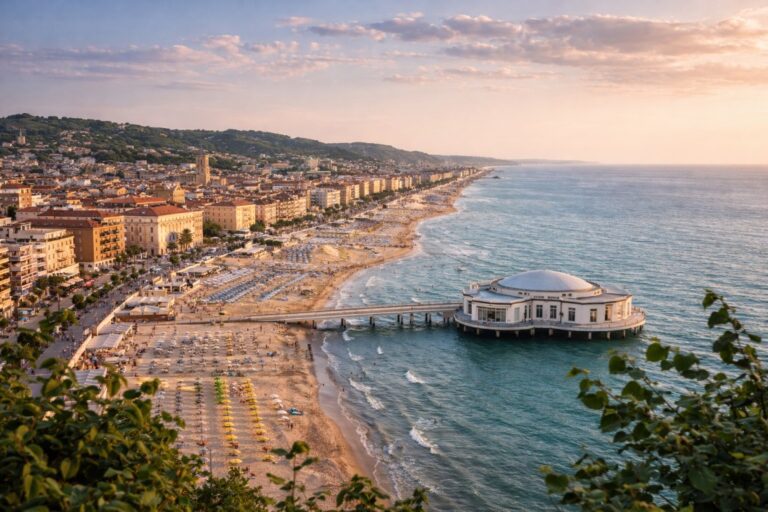
Senigallia
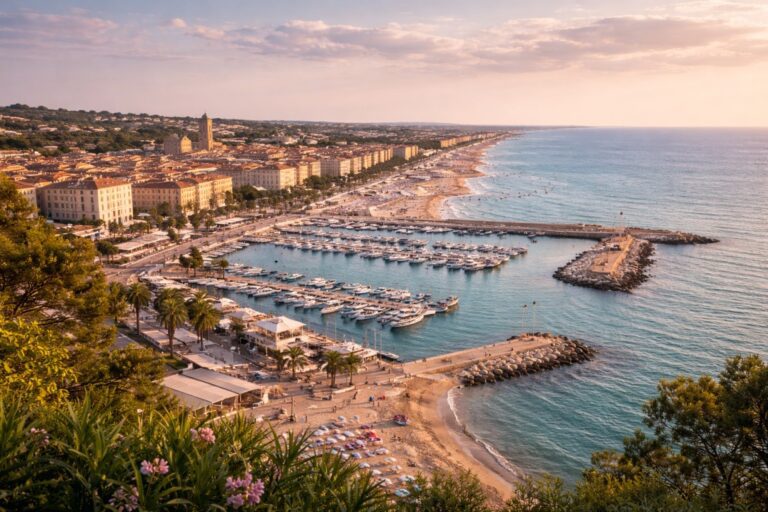
Fano
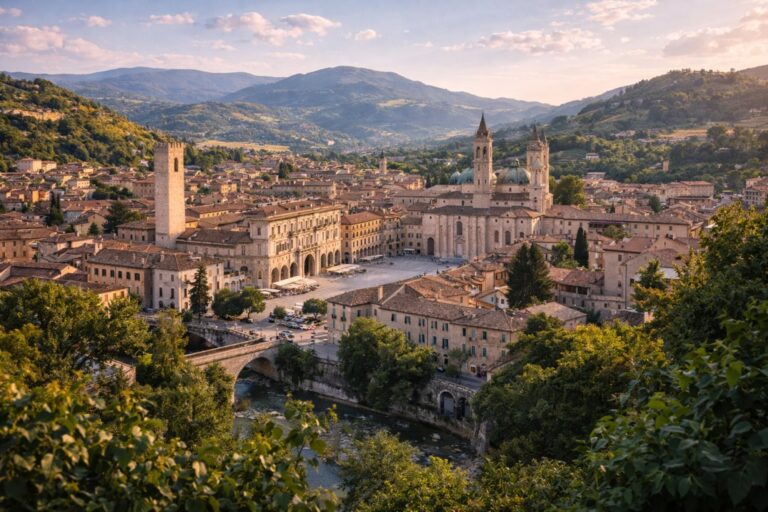
Ascoli Piceno
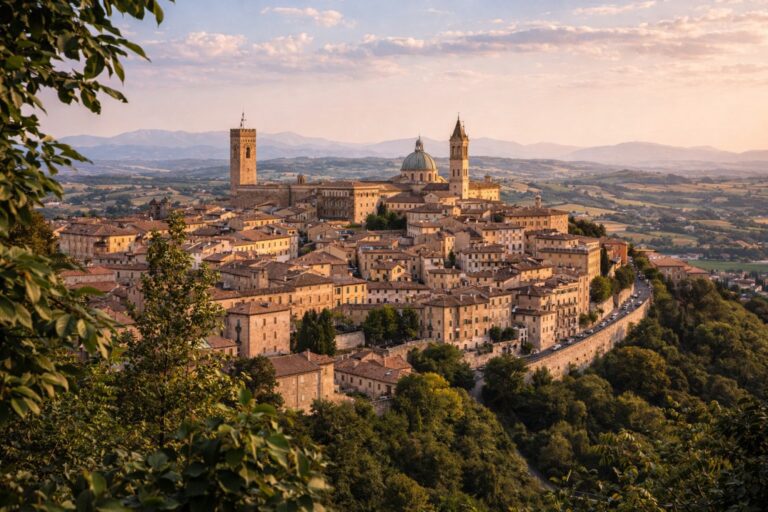
Macerata
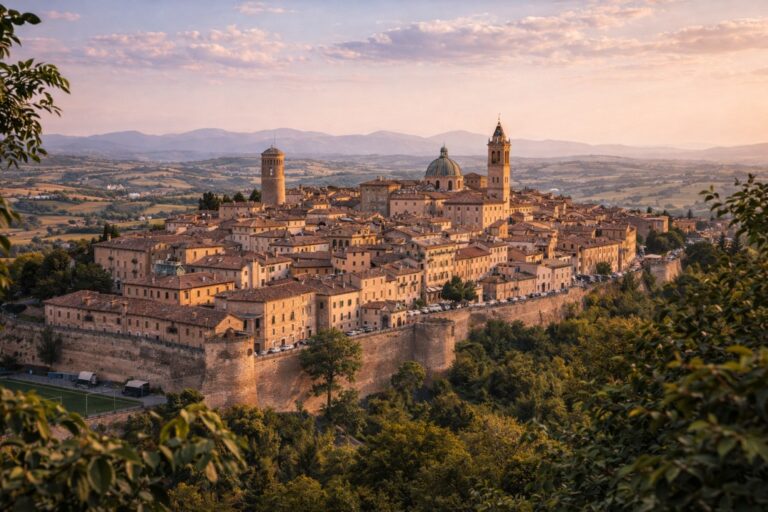
Jesi
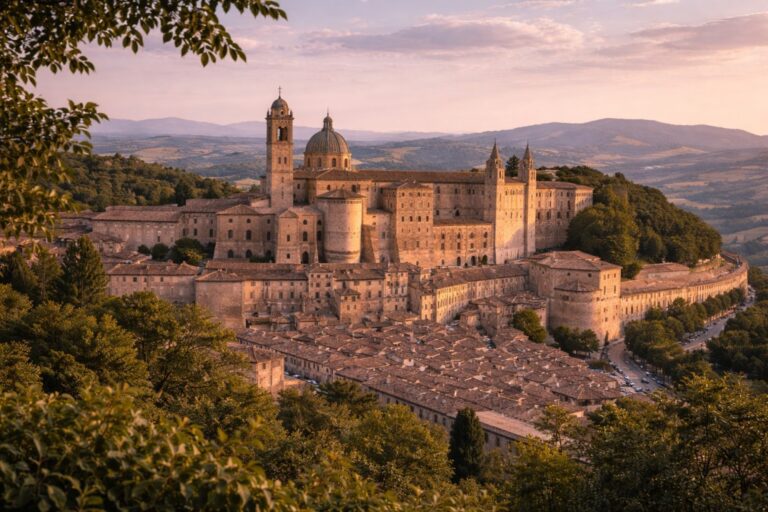
Urbino
Distinct Territories within Marche
Riviera del Conero (Ancona–Sirolo–Numana)
Pesaro–Fano & the northern Adriatic band
Macerata hinterland (Macerata–Tolentino–Civitanova axis)
Ascoli Piceno & the southern interior-to-coast corridor
Coliving Reality Check
Small, long-stay houses or apartments with stable shared routines integrate best into local patterns. In Marche, social trust accumulates through repetition and visibility; a coliving setup that behaves like a real home system — predictable, consistent, low-turnover — feels legible rather than intrusive.
High-turnover, event-heavy coliving formats struggle here. Constant new arrivals read as temporary, and temporary reads as peripheral. Without continuity, the concept remains socially adjacent instead of integrated.
Dispersion changes the model. Because Marche’s energy spreads across towns rather than concentrating in one hub, community often forms in nodes. A hybrid structure — one stable base plus periodic regional meetups — aligns better with how the region actually functions.
Fit: Small, long-stay houses or apartments with stable shared routines integrate best into local patterns.
Misfit: High-turnover, event-heavy coliving formats feel temporary and disconnected.
Dispersion means community often forms in nodes; hybrid base-plus-meetups works better than centralized hubs.
Coliving in Marche succeeds when it mirrors the region’s low-drama stability.
Discover Coliving in Marche
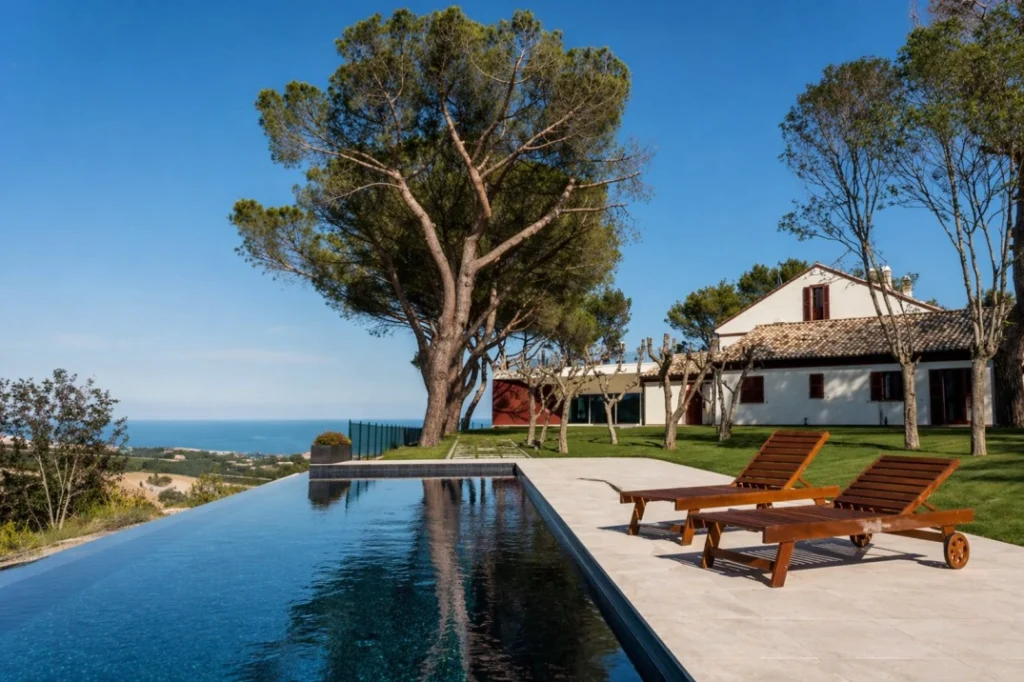
Shared Workspace
Navitas
Explore Other Regions in Italy
See how other regions compare in lifestyle and pace.
FAQs
Is Marche a good region for digital nomads?
Marche can work well for remote workers who prefer calm routines over constant events. Choose hubs like Ancona, Pesaro, or Jesi for services and coworking. Inland towns offer quiet focus but require more planning and fewer third places.
Where should I base myself in Marche for long-stay living?
Ancona and Jesi are practical for daily needs and transport. Pesaro and Fano suit people who want a more connected coastal routine. Macerata works for a quieter inland base with periodic coast access, while Ascoli offers stronger civic-center life.
How reliable is internet in Marche?
In cities and main towns, connectivity is generally workable. Reliability can drop quickly in hill villages or scattered rural housing. Verify performance at the exact address before signing, especially if your work depends on video calls or large uploads.
Does Marche have coworking spaces?
Yes, but they’re unevenly distributed. You’ll find options around Ancona/Jesi, the north coast near Pesaro, and some coastal towns. Inland areas often have few formal spaces, so plan for home setups and occasional travel to hubs.
What’s the biggest lifestyle trade-off in Marche?
Dispersion. Marche’s quality comes from many smaller centers rather than one dominant city. That gives you choice, but it also means fewer “everything-in-one-place” towns. Your experience improves when you pick a base and commit to local routines.