
Living & Coliving in Umbria
Umbria is Italy’s inner operating system: less performance, more private competence — and you feel that immediately when living in Umbria beyond short visits.
Living in Umbria means trading spectacle for stability. It’s an inland region shaped by universities, administration, agriculture, and small manufacturing — systems that function quietly and continuously. There is beauty, but it does not organize your life. Routine does.
Living and working remotely in Umbria feels quiet, practical, and inwardly structured. Perugia offers the strongest year-round base, but outside main corridors a car often becomes essential. Winters can be damp in older homes, and social life is slower to access — rewarding people who build routines deliberately.
Compared to Tuscany, Umbria offers less spectacle — and asks more self-sufficiency from your weekdays.
Is Living in Umbria for you?
Best For
- Deep-work people who want calm weekdays and don’t need constant external stimulation.
- Long-stay learners who like university energy without big-city friction.
- Car-enabled pragmatists who prefer functioning services over curated scenes.
Trade Offs
- The “Tuscany-lite” myth breaks quickly: beauty exists, but the service layer is thinner.
- Social access is slower unless you plug into institutions (university, sport clubs, neighborhood bars).
- Mobility is uneven: outside rail corridors, a car defines your autonomy.
Seasonality
- Best: April–June, September–October (stable rhythms, walkable days, steady energy)
- Summers: Dry inland heat + festival spikes; some towns become weekend-saturated
- Winters: Damp cold in stone homes; valley fog; evenings compress indoors earlier than expected
Quiet · Grounded · Disciplined · Unflashy
Living in Umbria: Daily Life & Lifestyle
Evenings are earlier and more local than newcomers expect. The social window often sits before dinner: the same bar counter, the same faces, familiar exchanges that repeat weekly. If you expect spontaneous international mixing, the quiet may register as absence. It isn’t absence — it’s selectivity.
Without a coastline, there is no easy escape valve. When weather turns damp or logistics snag — internet upgrades, landlord friction, commuting limits — you don’t reset by changing scenery. You build a system that absorbs friction. This is where Umbria for remote workers becomes either stabilizing or stifling.
Valleys behave differently from hill towns. In basins like Perugia or Terni, life can feel functional and active in pockets. Hill towns can be visually striking yet socially narrow once weekend visitors fade. Your lived experience depends less on fame and more on whether you are on a working spine or a beautiful cul-de-sac.
Remote Work Reality
Remote work in Umbria functions best when your base is structurally strong. Perugia remains the most reliable anchor: university gravity, services, third places, and year-round continuity.
Housing requires scrutiny. Older buildings mean thick walls, damp winters, inconsistent wiring, and heating variations. Choosing where to live in Umbria affects output more than aesthetics do.
If you need frequent novelty or rapid social onboarding, the region may feel muted. For independent workers who value repetition and focus, it becomes quietly powerful.
Wi-Fi stability matters more than vibe.
Mobility defines your productivity radius.
Housing comfort is engineered, not assumed.
Need a reliable workspace during your stay?
For longer stays, cafés and apartment Wi-Fi are not always enough. Italy Coliving readers can access a partner workspace offer with 10% off coworking, day offices, meeting rooms, business lounges, and virtual office services.
Partner link. Italy Coliving may earn from qualifying enquiries.
Coliving in Umbria is rarely plug-and-play — it’s self-assembled around structure.
Food & Culture
When living in Umbria, food is a social sorting system more than a spectacle. You learn who belongs where by where they buy bread, which norcineria they trust, and how seriously they treat simple things (olive oil, cured meat, lentils). A practical cue: invites often start as errands — “come facciamo due cose” — and only later turn into a meal.
Umbria diverges from its neighbors by being less performative about tradition. Tuscany’s confidence can feel outward-facing; Umbria’s confidence is quieter and more stubborn. You see it in religious calendars that still matter, in local festivals that are for locals first, and in the way “quality” is discussed as competence, not luxury.
Iconic food you’ll encounter in Umbria
Nature & Weekend Escapes
When living in Umbria, nature is not just backdrop — it’s a structural boundary. Mountains and valleys shape your week: some escapes are effortless (lake walks, hill trails), others are commitment-based (Apennine routes, winter hikes, plateau drives). A spatial cue: the region is inland, so “fresh air” replaces “sea air” — great for focus, less forgiving when you want an instant mood change.
Weekend escapes often feel like a reset into silence rather than an upgrade into buzz. You go out to widen your lungs, not to widen your social circle. That’s the Umbrian trade-off: the landscape gives you depth and recovery, but it won’t automatically give you new people.
Within easy reach when living in Umbria:
Lake Trasimeno: slow water, small towns, weekday calm
Valnerina / Nera river corridor: gorges, trail systems, cold-water clarity
Sibillini edge: plateau exposure, weather swings, altitude discipline
Orvieto countryside: tuff plateau landscape, quiet roads, rail leverage toward Rome/Firenze
Umbria’s nature rewards people who like repetition with depth — the same places, in changing light, over months.
Places in Umbria
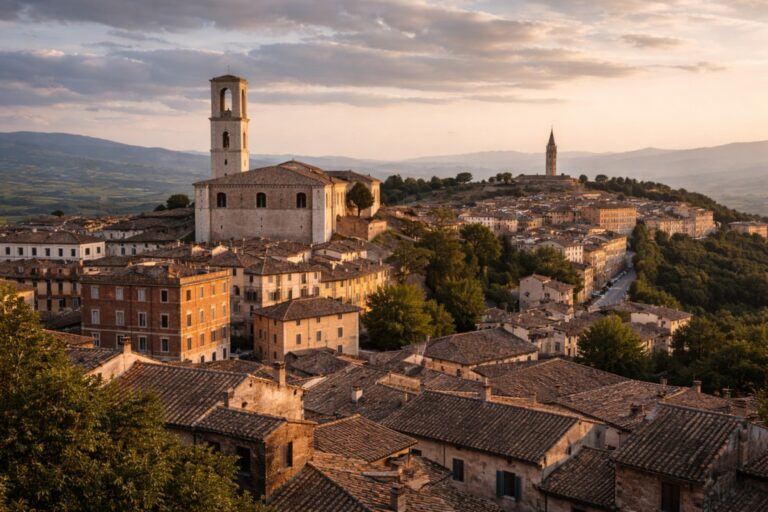
Perugia
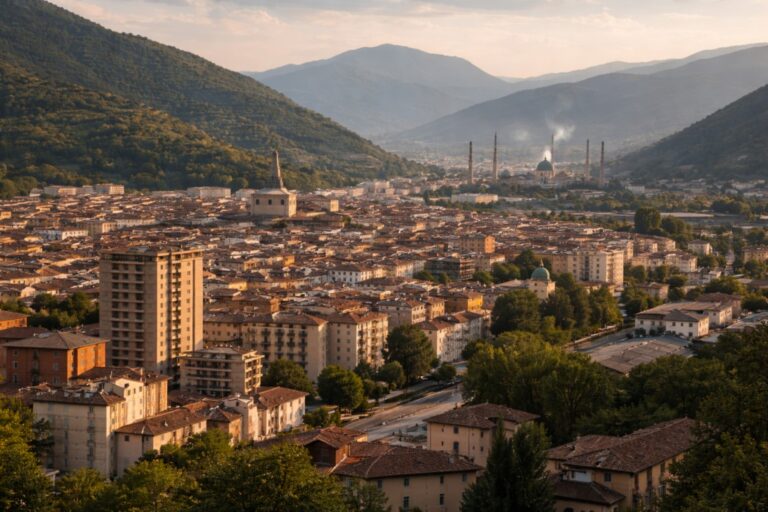
Terni
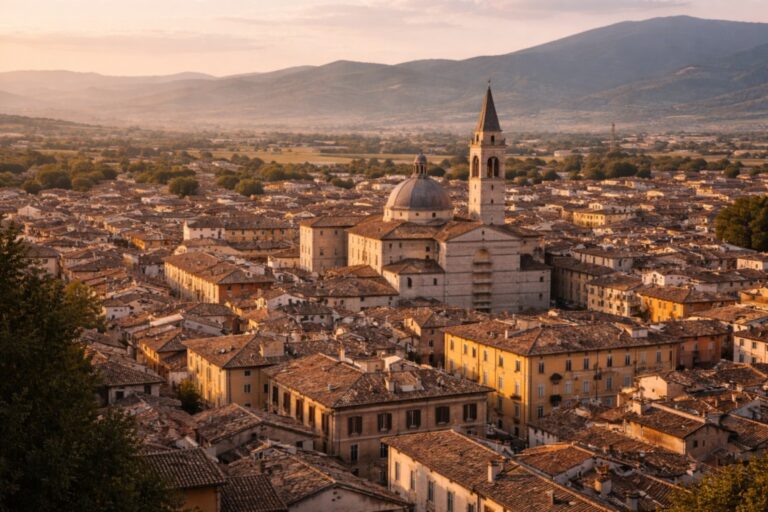
Foligno
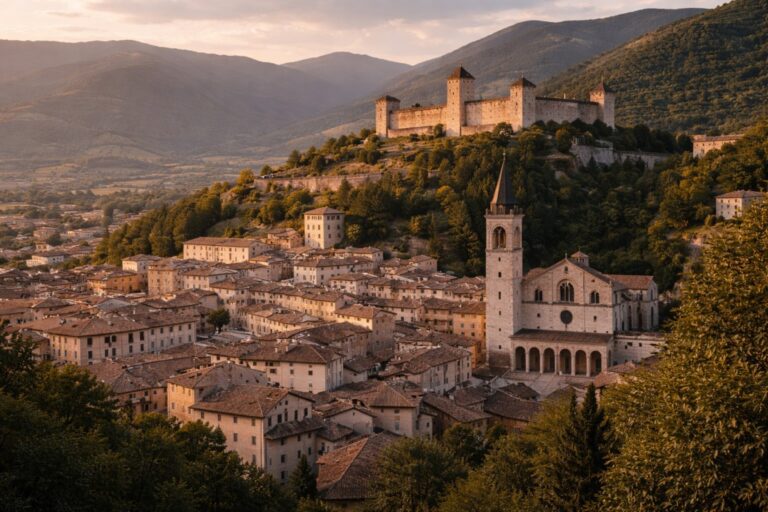
Spoleto
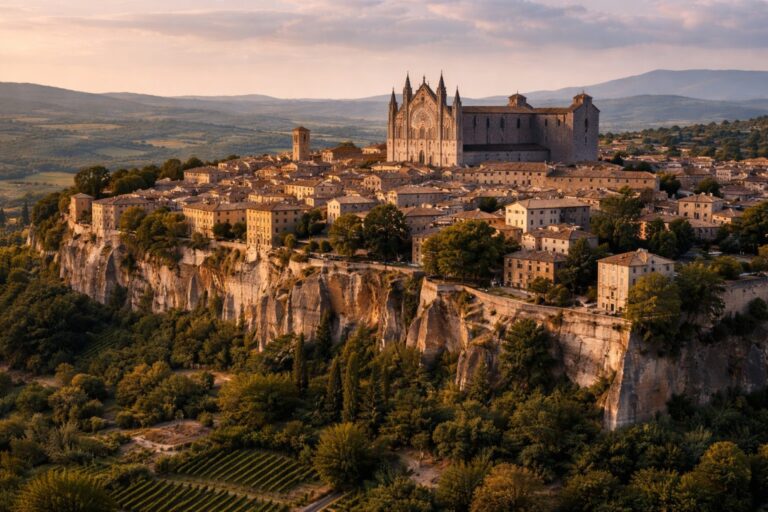
Orvieto
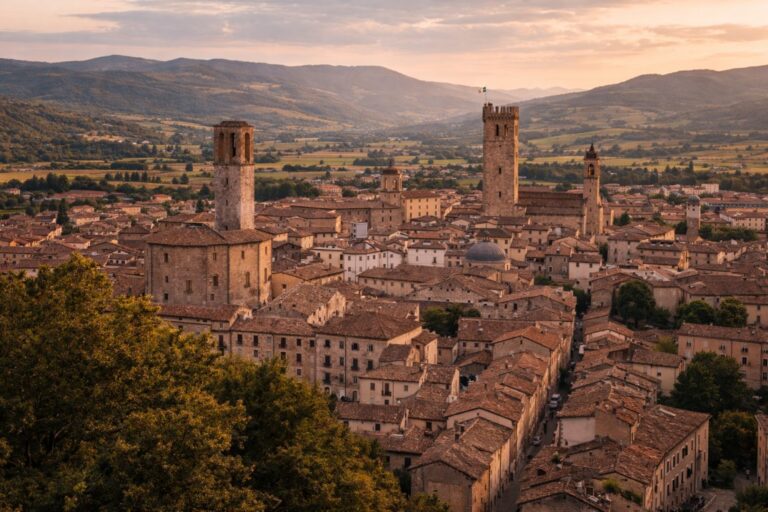
Città di Castello
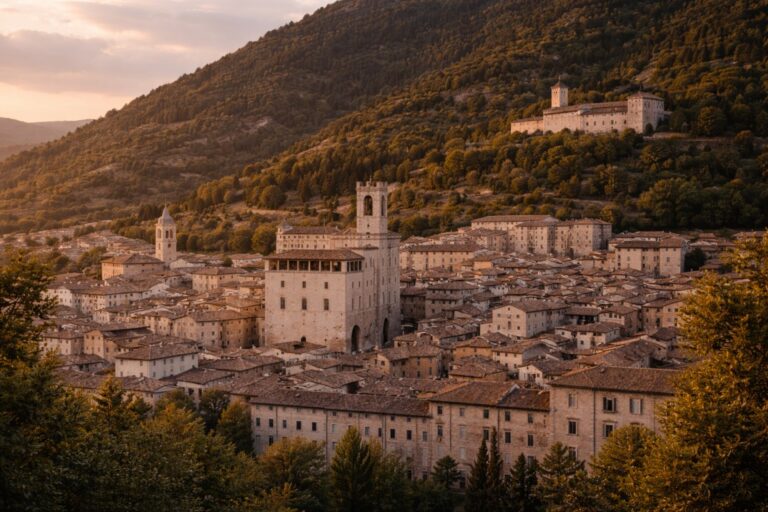
Gubbio
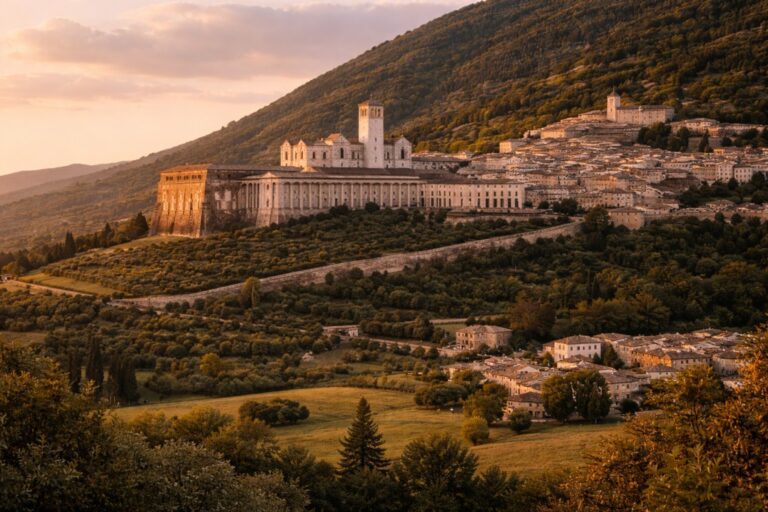
Assisi
Distinct Territories within Umbria
Perugia + Trasimeno Belt (Perugino / Lago Trasimeno)
Valnerina (Norcia–Cascia–Castelluccio axis)
Orvietano (Orvieto + tuff countryside)
Coliving Reality Check
Coliving in Umbria works best for people who value structure over spectacle. If you’re comfortable building your own rhythm, maintaining focus without external stimulation, and treating community as something constructed over time, the region becomes quietly powerful rather than slow.
It frustrates people who rely on fast social onboarding or ready-made international circles. If you need novelty to stay motivated, or if you measure liveliness by visible activity, Umbria can feel muted rather than restorative.
The practical watch-out is that most coliving in Umbria is self-assembled. You combine a long-stay rental, selective coworking, mobility planning, and deliberate social effort. Nothing is packaged — which is precisely why it works for some and not for others.
Fit: independent remote workers, couples, routine-oriented professionals.
Misfit: novelty-seekers needing instant international networks.
Most coliving in Umbria is self-constructed — long-stay rentals + coworking + deliberate effort.
The region gives you a stable stage. You provide the momentum.
Discover Coliving in Umbria
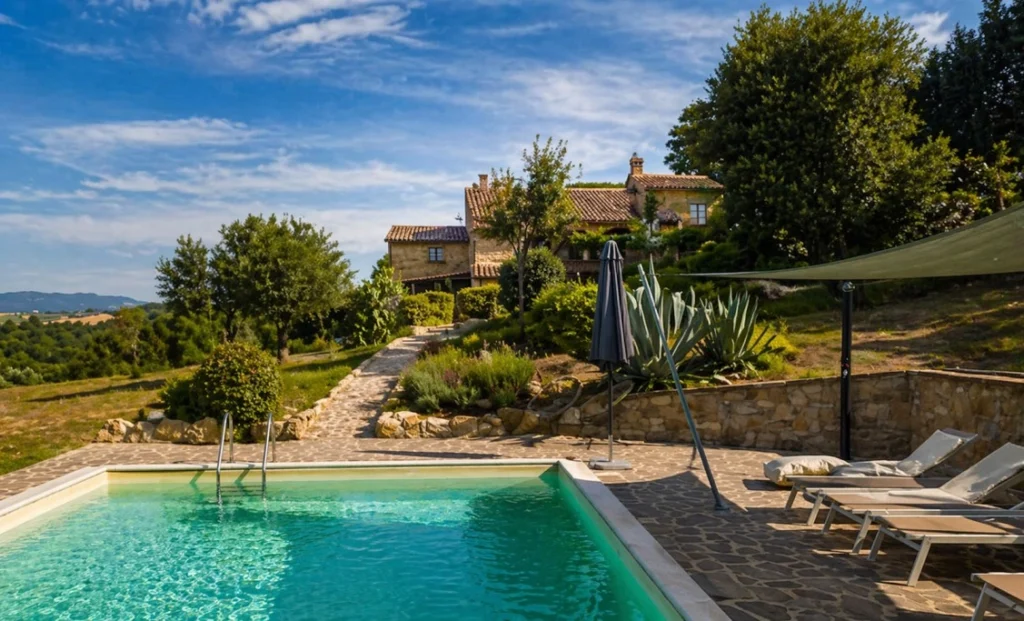
Dedicated Workspace
Villa Solisera
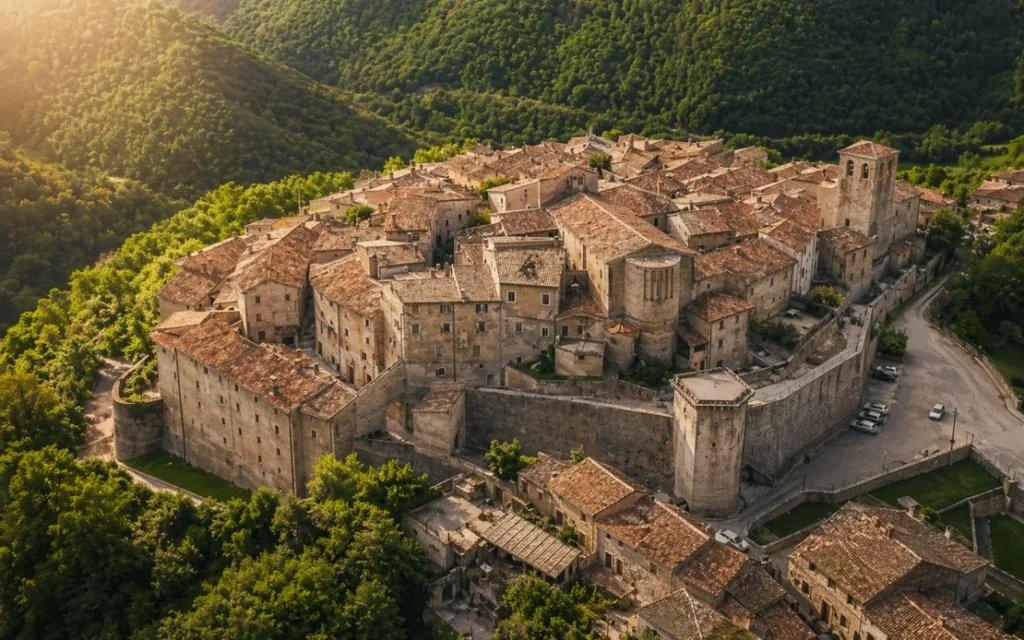
Coworking Nearby
Dolce Vita
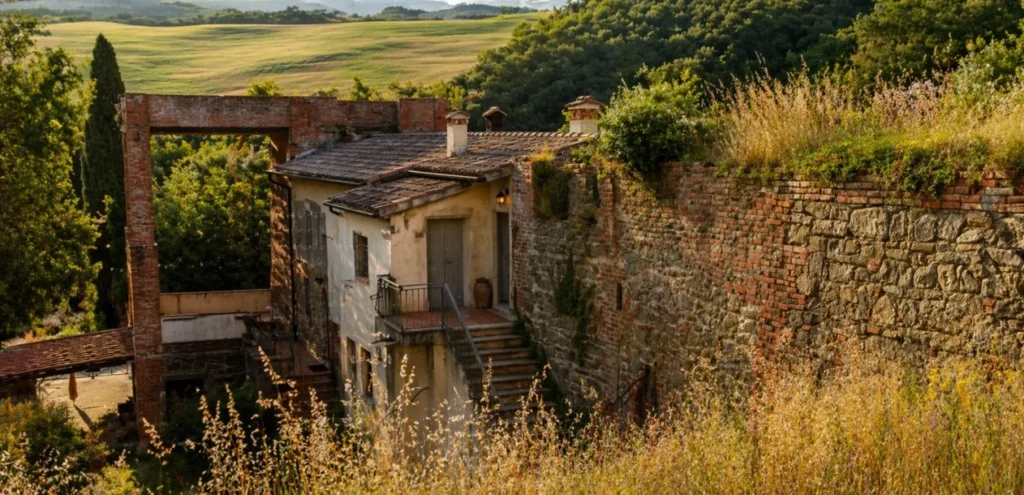
Shared Workspace
Il Fornello
Explore Other Regions in Italy
See how other regions compare in lifestyle and pace.
FAQs
Is Umbria good for remote work?
Yes if you choose a functional base (especially Perugia) and screen housing carefully. The main challenge is mobility: beyond rail corridors, daily life gets car-dependent, which affects productivity more than most newcomers expect.
Where should remote workers live in Umbria?
Perugia is the safest all-round base for services and structure. Orvieto works well if you need rail leverage to Rome or Florence. Terni can suit people who prefer a more functional, less aesthetic daily environment.
Do I need a car in Umbria?
Often, yes. In the cities you can manage without one, but many of the best long-stay rentals and calm living zones sit outside easy transit. A car changes your access to errands, nature, and social life.
What is winter like in Umbria?
Winters are less about snow and more about damp cold, valley fog, and stone buildings that hold chill. Comfort depends on heating, insulation, and sunlight exposure—so the apartment you choose matters as much as the town.
Is there a real coliving scene in Umbria?
Not a large, standardized one. Most “coliving” becomes self-assembled: long-stay rentals plus coworking/third places and deliberate social effort. It’s excellent for deep work and calm routines, weaker for plug-and-play international community.