
Living & Coliving in Abruzzo
A region where mountains set the rules, and the coast becomes the pressure-release valve.
Living in Abruzzo means accepting a structural duality: altitude inland, maritime ease on the Adriatic edge. This is not a region organized around a dominant capital or a single cultural center. It is organized around routes, weather windows, and the quiet negotiation between mountain constraint and coastal convenience.
Living and working remotely in Abruzzo means accepting a dual life: coastal convenience for services and social energy, and inland basins for space and deep focus. The main constraint is mobility—routes and weather shape plans. If you choose a clear base, the region becomes highly workable.
Unlike Marche’s soft hills, Abruzzo’s life is mountain-led, with coast as weekend release valve.
Is Living in Abruzzo for you?
Best For
- Work + wilderness balance — you want real access to mountains without giving up a functional coastal base.
- Two-speed living — quiet inland weekdays, social/sea-facing weekends without “moving regions.”
- Low-noise consistency — you prefer steady routines, practical relationships, and fewer lifestyle temptations.
Trade Offs
- Logistics are topography-led — “short distance” can still mean slow, indirect, weather-dependent routes.
- Social entry is earned — you’ll be tolerated early, included later; it’s not an instant-network region.
- Fragmented identity — inland and coast don’t behave like one place; you must choose your default.
Seasonality
- Best: April–June, September–October (stable days, fewer bottlenecks, easier movement inland/coast)
- Summers: coastal compression + inland retreat patterns; weekends feel “assigned” to the sea
- Winters: mountain weather dictates plans; some inland towns become deliberately sparse midweek
Mountain-led · Dual-centered · Practical · Quietly intense
Living in Abruzzo: Daily Life & Lifestyle
Abruzzo doesn’t run on a single “main city” rhythm. It runs on routes: the Adriatic corridor for services and momentum, and the inland basins for space, focus, and slower social tempo. You feel it immediately in how people plan—not “what’s nearby,” but what’s reachable today, and whether the mountain line is cooperating.
A concrete cue newcomers underestimate: errands cluster by geography, not preference. People stack tasks into one coastal run, one inland run, one practical supermarket loop, because crossing the region repeatedly costs time and attention. Dinner invitations often follow that same logic: midweek stays local; weekends are when movement is “spent.”
Social life gathers in repeat venues—bars functioning as living rooms, the same passeggiata strip, familiar pizzerie—because continuity matters more than novelty. You’re folded into an existing rhythm before you’re invited into anything exceptional. Recognition precedes spontaneity.
The structural contradiction is institutional: the official capital sits inland in L’Aquila, yet daily service gravity pulls toward Pescara–Chieti. That split creates a lived habit of switching worlds—admin and institutions on one side, coastal functionality on the other. If you accept the duality rather than fight it, living in Abruzzo becomes unusually workable.
Remote Work Reality
Remote work in Abruzzo is defined less by speed and more by placement. Choose your base correctly, and the region functions smoothly. Choose emotionally, and friction compounds quietly.
Connectivity is corridor-based. Reliability clusters along Pescara–Chieti and larger towns. Deep inland coverage can vary street by street rather than town by town, so housing selection matters more than postal code.
Coworking exists but selectively. Pescara offers options; elsewhere, remote workers default to home setups and occasional cafés. If you require daily coworking variety, you must position yourself deliberately.
Mobility is the hidden tax. Living inland while “using” the coast frequently can turn small distances into recurring daylight losses. Routes, not kilometers, decide your work rhythm.
Reliability clusters along the Adriatic spine.
Most remote work happens from private space, not shared hubs.
Time is lost in crossings, not distance.
Need a reliable workspace during your stay?
For longer stays, cafés and apartment Wi-Fi are not always enough. Italy Coliving readers can access a partner workspace offer with 10% off coworking, day offices, meeting rooms, business lounges, and virtual office services.
Partner link. Italy Coliving may earn from qualifying enquiries.
Placement is strategy. Abruzzo rewards deliberate basing, not improvisation.
Food & Culture
Abruzzo’s food culture is a social system built around group certainty: dishes that scale, rules everyone recognizes, and meals that don’t need explanation. The revealing part isn’t taste—it’s how often food marks membership. When you’re new, you’ll be offered the “standard version.” When you’re accepted, you’ll be told the local rule (cut, timing, where it’s done properly) and you’ll be expected to remember.
Compared to neighboring Adriatic regions, Abruzzo feels less about display and more about the competence of repetition—knowing exactly what a place is for (weekday lunch, post-work snack, Sunday table) and not mixing categories.
Iconic food you’ll encounter in Abruzzo
Nature & Weekend Escapes
When living in Abruzzo, nature isn’t a backdrop—it’s a governor. It shapes where people live, how they schedule, and what counts as “close.” The mountains are not a scenic extra; they are the reason certain towns feel protected, isolated, or intensely focused. You don’t casually “drop by” inland places. You commit to a route, a weather window, a plan.
Weekends reveal the region’s distinctive release pattern: many locals treat the coast as the social decompression zone and the interior as the reset zone. That creates a rhythm remote workers can use deliberately: coast for energy and ease, inland for deep work and low stimulation.
Within easy reach when living in Abruzzo:
Gran Sasso & Campo Imperatore — altitude, big sky, and weather that decides for you
Costa dei Trabocchi — linear coast living, walkable stretches, repeatable sea access
Majella foothills — colder basins, sharper seasons, quieter reset energy
Rome (selectively) — reachable for services and flights, but never frictionless
Living in Abruzzo rewards people who treat nature as an operating system, not a weekend decoration.
Places in Abruzzo
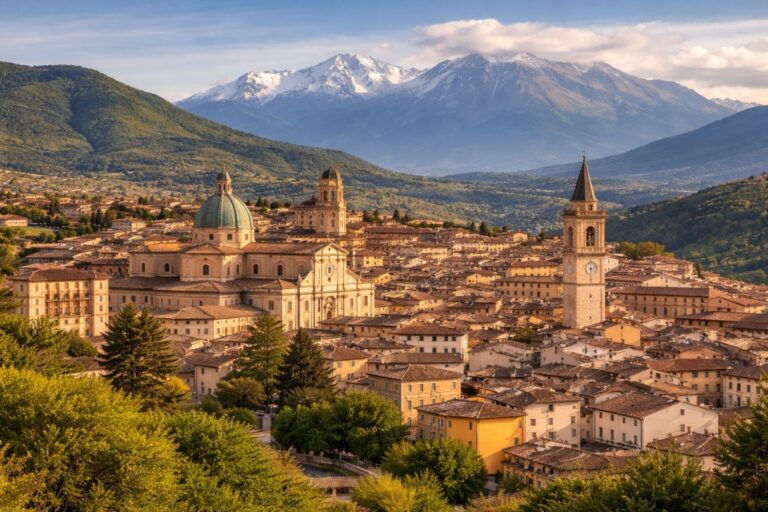
L’Aquila
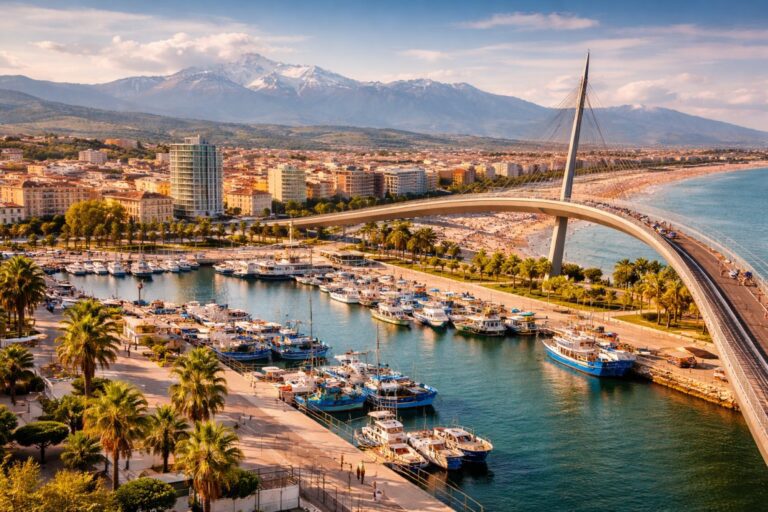
Pescara
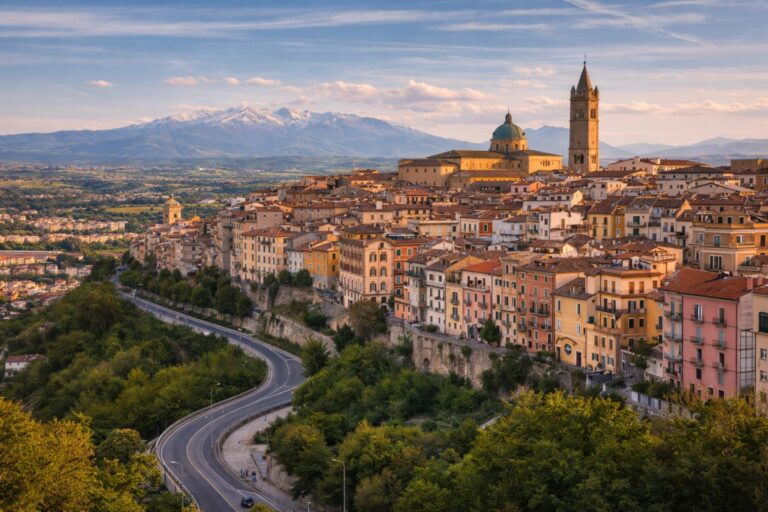
Chieti
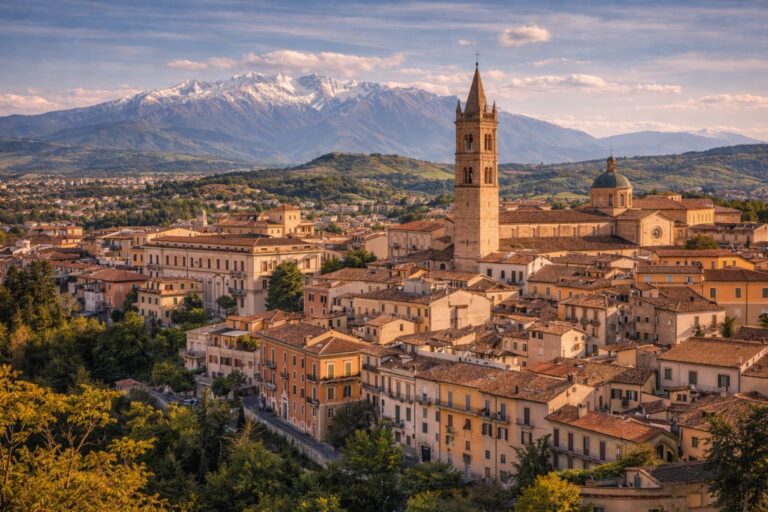
Teramo
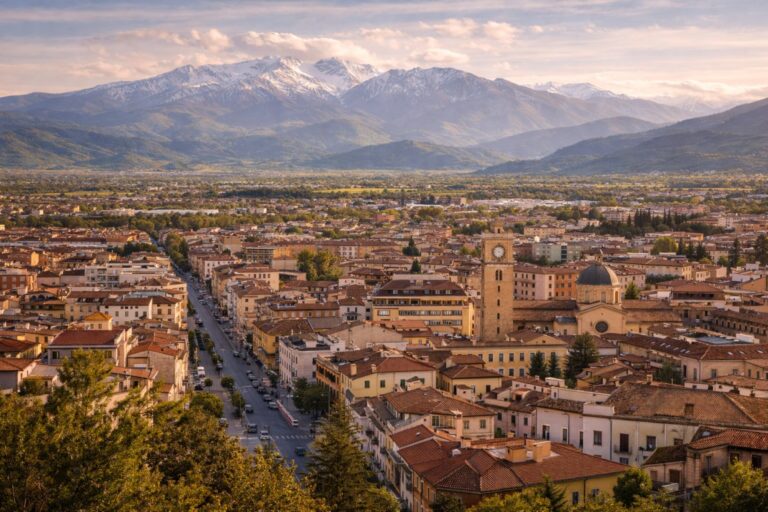
Avezzano
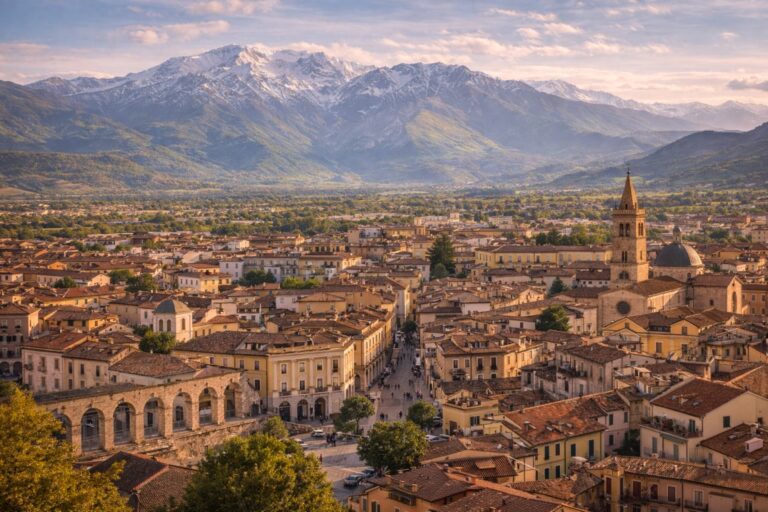
Sulmona
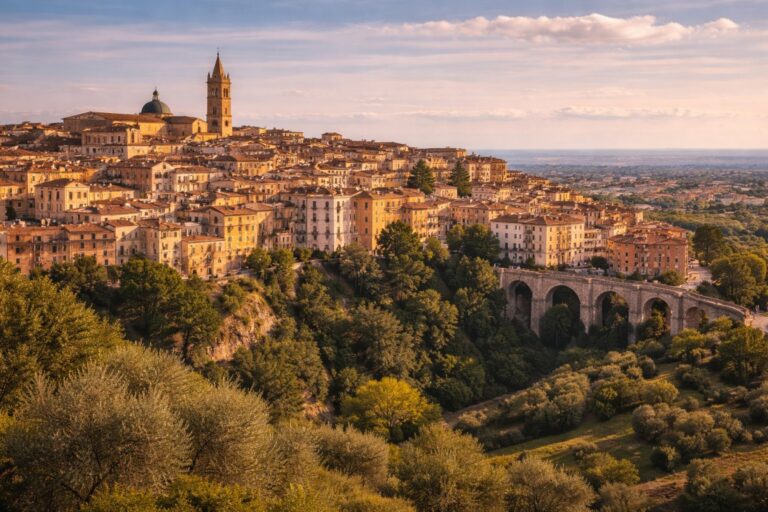
Lanciano
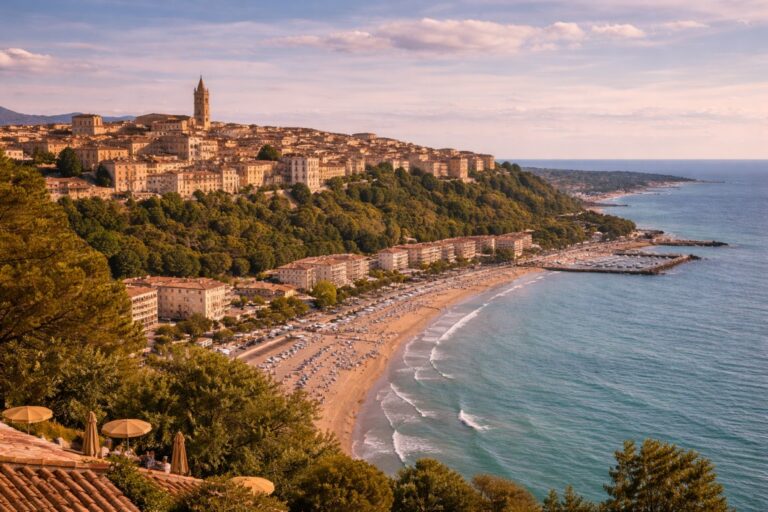
Vasto
Distinct Territories within Abruzzo
Costa dei Trabocchi (Costa Teatina)
Conca Aquilana & Gran Sasso edge
Marsica - Avezzano + Fucino plain
Valle Peligna & Majella foothills - Sulmona axis
Coliving Reality Check
Abruzzo works best for people who want focus during the week and a reliable, low-friction “release valve” on weekends. If you value structured days, predictable routines, and access to real landscape without needing constant stimulation, the region rewards consistency.
It frustrates people who require dense services, spontaneous variety, or city-level event frequency. If your version of remote life depends on layered coworking scenes, short-notice transport, or cultural turnover, Abruzzo’s structural gaps will accumulate rather than disappear.
The hidden risk is behavioral mismatch. Living inland while operating socially and professionally like a coastal commuter turns small crossings into repeated time loss. Over months, that quiet inefficiency erodes the very focus you moved here to gain.
Fit: Weekday focus with predictable weekend release.
Misfit: Dense-service dependence and frictionless mobility needs.
Living inland while behaving like a coastal commuter quietly drains time.
Choose the geography that matches your weekday self, not your weekend self.
Discover Coliving in Abruzzo
Explore Other Regions in Italy
See how other regions compare in lifestyle and pace.


FAQs
Is Abruzzo a good region for remote workers?
Yes, if you choose your base carefully. Pescara and the Adriatic corridor are easiest for services and connectivity, while inland towns offer focus and space but can add transport friction and uneven infrastructure by area.
Where should I live in Abruzzo for a long stay?
For convenience and social energy, start with Pescara or nearby towns. For quieter, work-first living, consider L’Aquila’s area, Sulmona, or Avezzano—each with a different rhythm and a different mobility cost.
Are there coworking spaces in Abruzzo?
They exist but cluster in a few hubs, especially Pescara. In many inland towns, remote work is more home-based, with cafés as occasional backups. Plan for a primary setup that doesn’t rely on coworking availability.
What’s the biggest daily-life adjustment in Abruzzo?
Movement. Distances don’t tell the truth because the region is topography-led. People cluster errands and plan days around routes, not preferences—especially when switching between inland basins and the coast.
What is winter like for living in Abruzzo?
Winter is the season when the region’s structure becomes most obvious: colder inland basins, earlier evenings, and weather-shaped mobility. It can be excellent for focus, but you’ll want a housing setup that’s comfortable and well-heated.