
Living & Coliving in Friuli Venezia Giulia
Italy’s most border-built region — where daily life is shaped as much by Central European habits as by Italian rhythms.
Living in Friuli Venezia Giulia means stepping into a quieter version of Northern Italy — one where the cultural logic comes from borders, trade routes, and layered languages rather than spectacle.
Trieste looks toward Central Europe, Udine anchors the interior with steady routines, and the smaller nodes operate with a practical independence that surprises people expecting the more socially expansive atmosphere of Veneto.
Living and remote work in Friuli Venezia Giulia feels structured, border-influenced, and quietly practical. Trieste and Udine provide the strongest bases for long stays, while smaller areas require more self-sufficiency. Nature and weather—especially the Bora wind and mountain winters—shape everyday routines more than visitors expect.
Compared to Veneto, Friuli Venezia Giulia feels less performative and more border-procedural.
Is Living in Friuli Venezia Giulia for you?
Best For
- People who want “Italy, but quieter and more structured,” with real urban anchors like Trieste or Udine.
- Remote workers who value proximity to Slovenia, Austria, and Croatia without living inside an expat bubble.
- Long-stay planners who prefer practical systems: universities, SMEs, rail links, and low-drama daily routines.
Trade Offs
- Social warmth tends to be earned through repetition rather than immediate inclusion.
- The region functions as multiple ecosystems: Trieste, Udine, and Carnia each behave differently.
- Weather plays an active role in daily life — wind on the coast, winter logistics in the mountains.
Seasonality
- Best: April–June and September–October offer balanced temperatures and stable routines.
- Summers: Coastal areas become two-speed environments — resort intensity near the sea, quieter normality inland.
- Winters: Trieste requires wind discipline, while the mountain interior requires logistical planning around snow, heating, and distance.
Border-minded · Composed · Precise · Quietly independent
Living in Friuli Venezia Giulia: Daily Life & Lifestyle
Living in Friuli Venezia Giulia often reveals itself through behavior rather than scenery. In Trieste, mornings organize themselves around coffee and walking routes that repeat with almost institutional consistency. Cafés fill early, conversations remain measured, and evenings tend to end cleanly rather than stretch into theatrical nightlife.
A newcomer quickly discovers that social entry rarely happens through spontaneity. Instead, it grows through repetition: the same café at the same hour, the same bar counter, the same running route along the sea or through the city squares. Over time, the pattern becomes the invitation.
The interior tells a different story. Udine and the Friulian plain operate with a quiet competence culture built around small firms, early mornings, and practical routines. Work tends to feel purposeful but understated, and social life remains connected to family networks and familiar places.
The trade-off is subtle but real. People here can be multilingual, outward-looking, and internationally aware while still treating private life as something carefully protected. If you need instant community, the region can feel reserved. If you appreciate steadiness and discretion, it often feels unusually sane.
Remote Work Reality
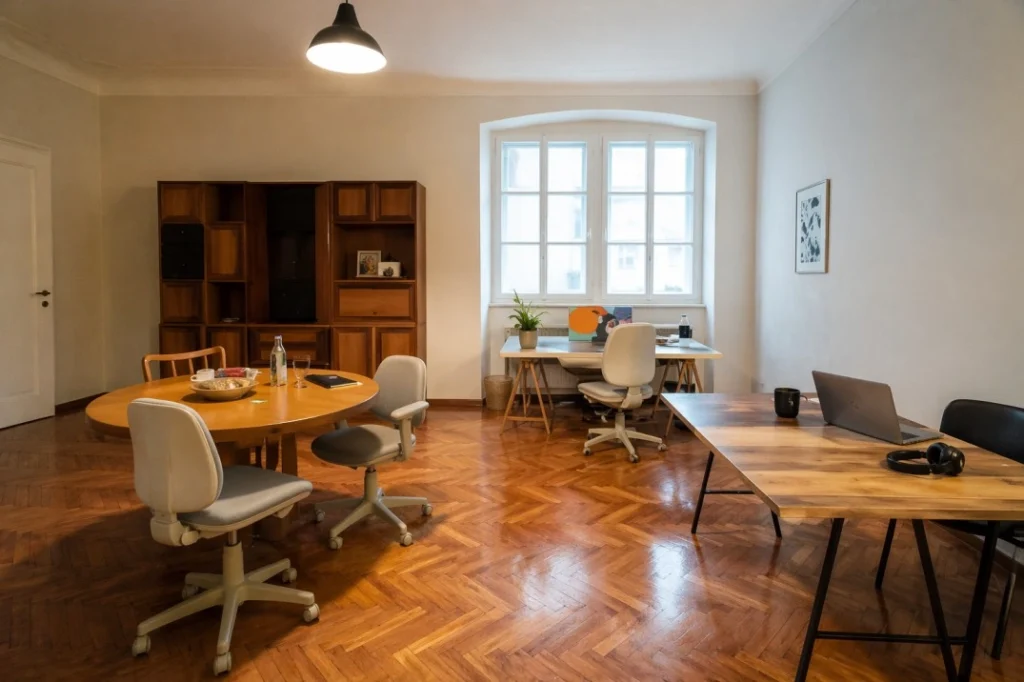
Remote work in Friuli Venezia Giulia tends to revolve around two practical anchors: Trieste and Udine. Both cities offer universities, steady café culture, and enough services to build a repeatable routine.
Coworking spaces exist, particularly in Trieste, but the landscape is uneven. Outside the main cities, remote workers often rely on a combination of cafés, libraries, and home setups.
Another structural reality is that the region is multi-node rather than centralized. Choosing a smaller base can mean occasional travel to nearby cities for services, coworking, or administrative errands.
People who thrive here usually build their own rhythm instead of relying on a dense nomad scene or constant events.
Reliable in the main cities, stable but quieter elsewhere.
Café culture supports regular work routines.
Multi-node geography means occasional travel between towns.
Need a reliable workspace during your stay?
For longer stays, cafés and apartment Wi-Fi are not always enough. Italy Coliving readers can access a partner workspace offer with 10% off coworking, day offices, meeting rooms, business lounges, and virtual office services.
Partner link. Italy Coliving may earn from qualifying enquiries.
Remote work in Friuli Venezia Giulia works best for people who value calm structure and can create their own routine.
Food & Culture
Food here is a map of borders and frugality, not a performance. You’ll see Central European structure (soups, pork, preserved foods) living next to Adriatic seafood — and neither side needs to advertise itself. The cultural tell is how often people default to simple, local, and known: not because they fear novelty, but because food is treated as part of a weekly system.
Socially, a key code is the “place-based” gathering: specific bars, specific tables, specific seasonal rituals. In the Carso, the osmiza tradition (when it appears) isn’t a tourist novelty — it’s a reminder that this region has long functioned through micro-economies and local permissions, not big-city abundance.
Iconic food you’ll encounter in Friuli Venezia Giulia
Nature & Weekend Escapes
Nature in Friuli Venezia Giulia is not a single backdrop — it’s a set of constraints with different rules. The Carso is stony, windy, and close; it teaches you that “green” isn’t always soft. The mountains (Carnia, Dolomiti Friulane) introduce a different contract: winter planning, heating reality, fewer services, and a sense that distance still matters.
The coast and lagoons (Grado/Lignano) are the region’s seasonal pressure valve — but they also reveal the two-speed dynamic: in summer, certain places become functional resorts, which can either energize you (if you like seasonal intensity) or disrupt your routine (if you don’t).
Within easy reach when living in Friuli Venezia Giulia:
Carso plateau: limestone landscapes above Trieste with sudden sea views
Tagliamento river: one of Europe’s last wild alpine rivers
Dolomiti Friulane: quieter alpine terrain with serious mountain character
Grado lagoon: coastal escape with strong summer seasonality
Nature here doesn’t decorate daily life — it quietly sets the rules.
Places in Friuli Venezia Giulia
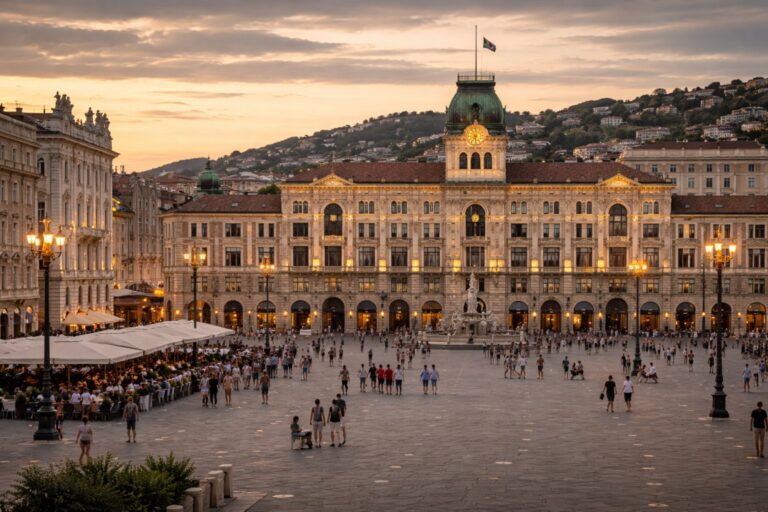
Trieste
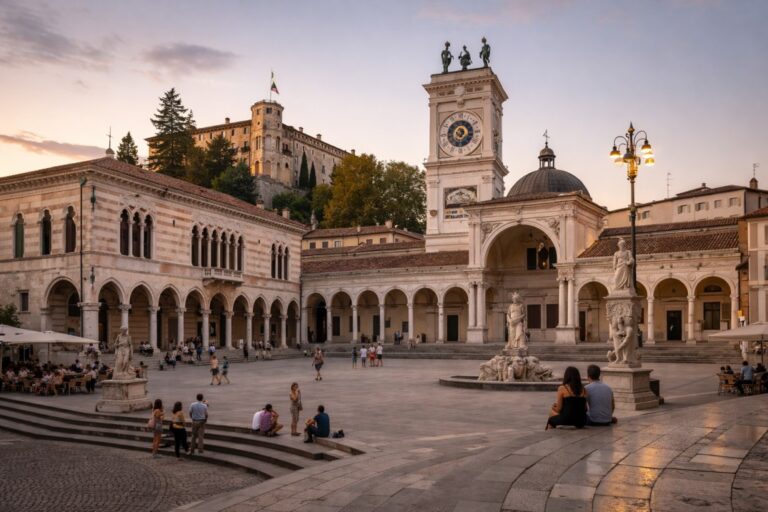
Udine
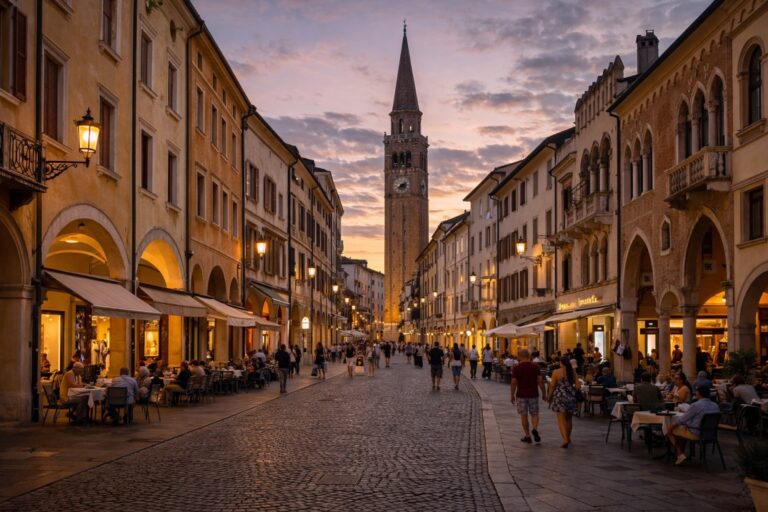
Pordenone
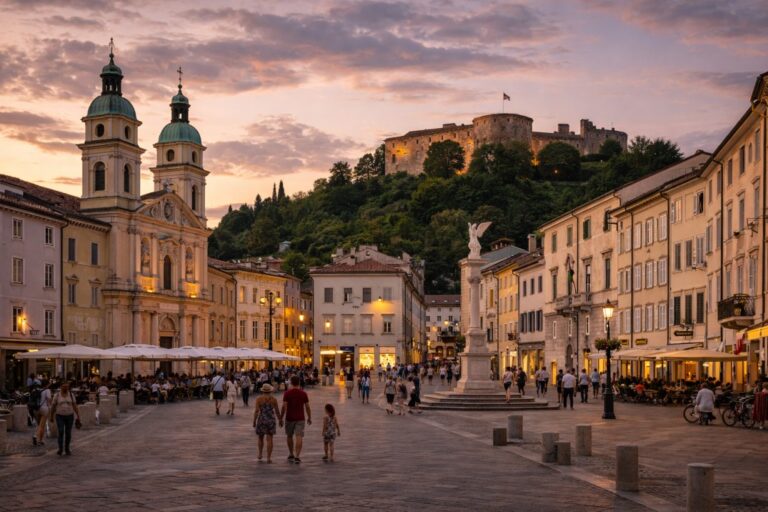
Gorizia
Distinct Territories within Friuli Venezia Giulia
Trieste & the Carso (Carso / Kras)
Udine & the Friulian Plain (Friuli centrale)
Gorizia & the Collio / Brda border hills
Carnia & the Dolomiti Friulane (mountain interior)
Coliving Reality Check
Remote work in Friuli Venezia Giulia works best for people who prefer calm structure and independence. If your idea of coliving is a stable base where connection grows gradually, the region can work well.
It tends to be less suitable for people who rely on dense social scenes or frequent events to feel energized. The social environment often rewards patience rather than spontaneity.
Another practical consideration is geography. Outside Trieste and Udine, coliving may look more like independent rentals and intentional meetups than structured shared living spaces.
Fit: focused remote workers who value calm routines.
Misfit: nomads seeking constant social density.
Smaller towns require self-sufficiency.
When living in Friuli Venezia Giulia think of the region as two anchors — Trieste and Udine — surrounded by quieter satellites.
Discover Coliving in Friuli Venezia Giulia
Shared Workspace
Benetural
Explore Other Regions in Italy
See how other regions compare in lifestyle and pace.
FAQs
Is Trieste a good base for remote work?
Yes. Trieste combines walkability, international culture, and strong café routines, which many remote workers rely on for daily structure. The adjustment is social: belonging usually develops through repeated presence rather than instant community.
Where is the most practical long-stay base besides Trieste?
Udine often becomes the most stable alternative. Housing is generally easier to navigate, daily services are consistent, and the city offers a quieter rhythm that suits remote workers who prefer steady routines.
Does Friuli Venezia Giulia have coworking spaces?
Coworking options exist mainly in Trieste and Udine. Outside those cities, remote workers typically combine cafés, home offices, and libraries. Planning occasional trips to larger towns can help maintain variety in work environments.
What is the hardest adjustment for foreigners staying long term?
Many newcomers underestimate how place-based social life can be. Relationships often grow through repeated interaction in specific venues or routines rather than spontaneous invitations.
Is winter a problem for remote living here?
In Trieste, winter is mostly about managing the Bora wind and mood shifts. In the mountain interior, however, winter requires practical planning around heating, driving conditions, and seasonal closures.