
Living & Coliving in Valle d'Aosta
Italy’s smallest region runs like a mountain micro-state: bilingual, disciplined, and shaped by snow, tunnels, and altitude.
Living in Valle d’Aosta means adapting to a system where geography quietly dictates routine. Italy’s smallest region behaves less like a collection of towns and more like a single valley network with a few practical nodes. Roads, altitude, and winter conditions influence where people live, how errands are planned, and how social life unfolds.
Remote work in Valle d’Aosta offers something unusual in Italy: a compact environment where routines become stable quickly. The trade-off is that your options are limited. Once you understand the valley’s internal logic — Aosta as the service center, upper valleys shaped by tourism, lower valleys oriented outward — daily life becomes surprisingly predictable.
Unlike Piemonte, Valle d’Aosta functions as one valley system: fewer options, sharper constraints, faster consequences.
Is Living in Valle d'Aosta for you?
Best For
- People who prefer a compact region where routines become familiar quickly
- Remote workers who value quiet competence more than urban variety
- Anyone who wants nature to be the default condition of daily life
Trade Offs
- Tourist valleys create price spikes for rent, groceries, and everyday services
- The range of viable base towns is small compared to other Italian regions
- Social access builds slowly through repetition rather than quick introductions
Seasonality
- Best: late spring and early autumn when roads are clear and pricing stabilizes
- Summers: hiking traffic and second-home rhythms increase activity without creating city-style energy
- Winters: altitude governs daily logistics — roads, light, heating costs, and mobility
Alpine · Compact · Regulated · Quiet
Living in Valle d'Aosta: Daily Life & Lifestyle
Valle d’Aosta doesn’t feel like a region with many places. It feels like a single valley system with a few functioning nodes, and the mountains quietly determine what is practical. People discuss road conditions the way coastal regions discuss wind. Winter tires are expected rather than suggested, and the car trunk often carries the equipment that makes daily mobility possible.
One adjustment newcomers often underestimate is how planning replaces spontaneity. Errands are batched. A quick coffee becomes “while I’m already in Aosta,” and a simple grocery run can involve timing daylight and road exposure. Distances on a map remain short, but lived distance changes with elevation and winter conditions.
Social life forms around repetition rather than constant novelty. Becoming a regular at a café matters more than discovering new venues each week. A small bar near the piazza, a consistent morning coffee stop, or a post-hike aperitivo becomes a social anchor. Over time those predictable places slowly open the door to local circles.
There is also a cultural nuance that outsiders often miss. Valle d’Aosta is Alpine, but its identity leans slightly toward France in tone and administration. The bilingual environment appears in everyday infrastructure — road signs, schools, and municipal communication — reminding newcomers that this region operates with a practical autonomy within Italy.
Remote Work Reality
Remote work in Valle d’Aosta is workable, but it requires realistic expectations about infrastructure and geography. The valley structure concentrates services in a few locations, meaning your base choice matters more here than in many Italian regions.
Connectivity is generally reliable in Aosta and the main valley towns, but it can weaken in smaller side valleys or older stone buildings. Remote workers often discover that the region works best when their primary base is close to the valley floor.
Workspace culture is home-first rather than café-driven. Dedicated coworking options exist but remain limited, so most long-stay residents build a stable home setup and treat cafés as occasional social spaces rather than daily offices.
Winter logistics influence work habits more than many newcomers expect. Deliveries slow down, daylight shortens dramatically, and travel between towns requires more planning than in flatter regions.
Connectivity varies by altitude
Home-first work setups
Winter logistics matter
Need a reliable workspace during your stay?
For longer stays, cafés and apartment Wi-Fi are not always enough. Italy Coliving readers can access a partner workspace offer with 10% off coworking, day offices, meeting rooms, business lounges, and virtual office services.
Partner link. Italy Coliving may earn from qualifying enquiries.
If your work thrives in calm, predictable environments, Valle d’Aosta can be an extremely focused base.
Food & Culture
Food in Valle d’Aosta isn’t trying to impress you—it’s trying to get you through winter. The regional table reveals a social logic: people eat like they live—protective, warm, and designed for repetition without boredom. Meals lean toward what stores well, what reheats, what makes sense after cold and effort. The cultural signal is not “farm-to-table aesthetics,” but competence: the pantry is stocked, the cellar is real, and guests are fed like it’s a responsibility.
What diverges from neighboring regions is the French-facing Alpine identity: not just cheese and charcuterie, but a quieter, more contained hospitality where the point isn’t abundance as spectacle—it’s the assurance that you’ll be okay. A concrete rhythm cue: dinners often start early, and winter evenings can feel domesticated—home tables beat nightlife, especially outside Aosta.
Iconic food you’ll encounter in Valle d'Aosta
Nature & Weekend Escapes
Here, nature is not a weekend escape—it’s the operating environment. You don’t “go to the mountains”; you live inside them, and your recreation is often an extension of daily life: a short hike after work when daylight allows, a Sunday that starts early because parking and weather matter, and a winter that quietly dictates what counts as a reasonable plan. Spatial cue: the valley’s linear shape creates a constant sense of up-valley vs down-valley—and your identity tends to follow that orientation.
The region offers serious outdoor access, but it comes with an honest constraint: effort is built in. Even a simple trail has altitude logic, and winter adds gear, caution, and time. This produces a particular kind of calm: you stop expecting the landscape to entertain you, and you start using it as a focus tool—especially if you’re remote-working and want fewer distractions.
Within easy reach when living in Valle d'Aosta:
Gran Paradiso National Park: quiet forest hikes and serious alpine terrain
Cogne valley: classic alpine village atmosphere and cross-country skiing
Monte Bianco / Mont Blanc massif: dramatic high-alpine landscapes
Saint-Vincent: thermal spa culture and slower evening resets
In Valle d’Aosta, the landscape does not decorate daily life — it organizes it.
Places in Valle d'Aosta
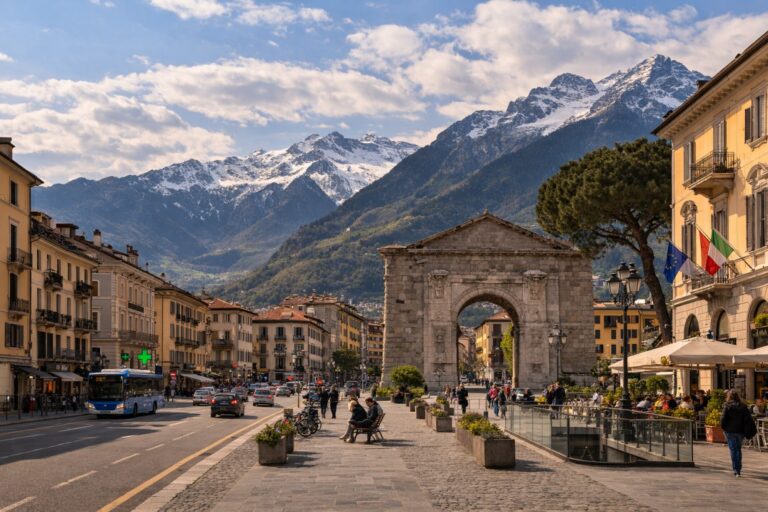
Aosta
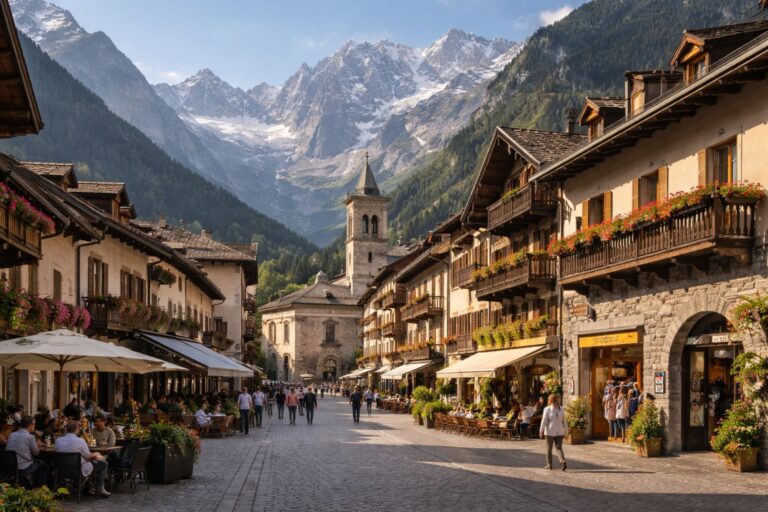
Courmayeur
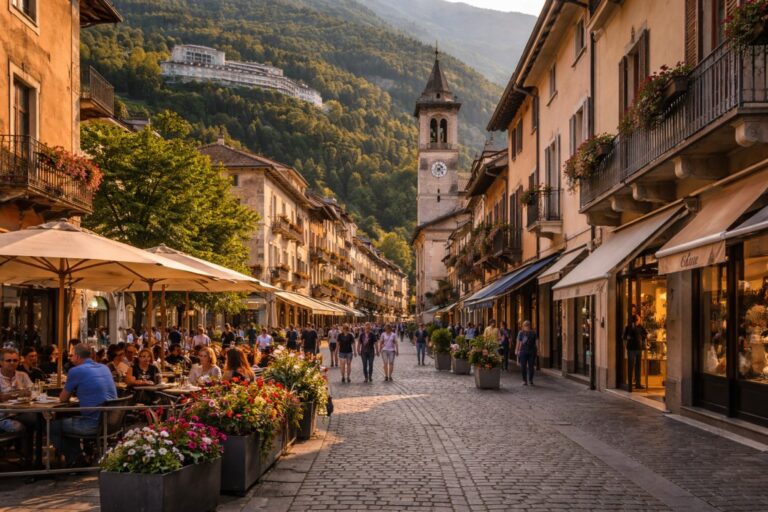
Saint-Vincent
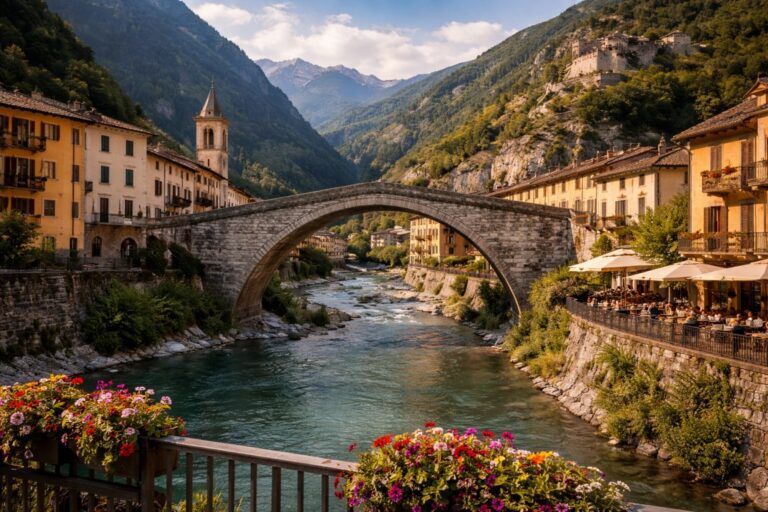
Pont-Saint-Martin
Coliving Reality Check
Some remote workers discover that Valle d’Aosta fits retreat-style living extremely well. The calm environment, clear routines, and mountain discipline create long stretches of focused work.
Others struggle with the limited social ecosystem. Without a large rotating community, social life grows slowly and depends on becoming part of local routines.
The biggest watch-out is expecting the region to behave like larger Alpine destinations. Valle d’Aosta remains compact, and the option set stays intentionally small.
Fit: Self-directed workers seeking quiet focus.
Misfit: People who rely on constant events and large communities.
The valley’s small scale limits spontaneous variety.
Coliving in Valle d’Aosta rewards people who enjoy structure and calm more than constant novelty.
Discover Coliving in Valle d'Aosta
Explore Other Regions in Italy
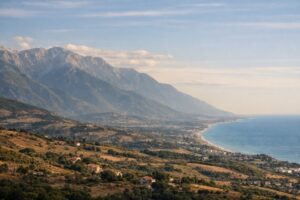
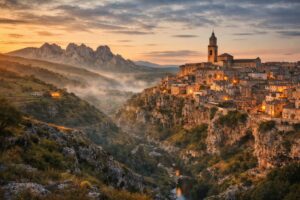
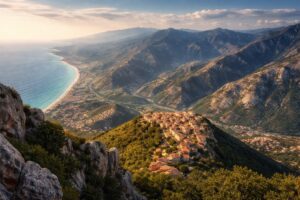
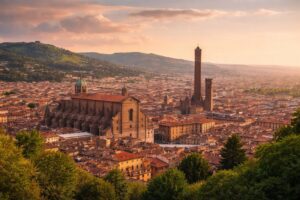
See how other regions compare in lifestyle and pace.

FAQs
Is Valle d’Aosta good for remote work year-round?
Yes, particularly if you base yourself in Aosta or the main valley towns where services and connectivity are more reliable. Smaller side valleys can have weaker infrastructure and winter conditions can influence mobility and social life.
Where should remote workers live in Valle d’Aosta?
Aosta is usually the most stable long-term base thanks to rentals, services, and transportation. Upper valleys provide stronger nature immersion but can be more expensive and seasonal.
Is coliving common in Valle d’Aosta?
Coliving exists but tends to be retreat-style rather than community-driven. Remote workers often create their own routines first and build local connections gradually.
How difficult is winter living in Valle d’Aosta?
Winter is manageable but requires preparation. Road conditions, heating costs, and daylight hours affect routine, especially in higher valleys.
Do you need a car in Valle d’Aosta?
For most long-stay lifestyles, yes. While Aosta is somewhat walkable, the valley geography encourages driving between towns and batching errands.