
Living & Coliving in Liguria
A narrow, vertical region where daily life is shaped by slope, rail lines, and the logic of limited space.
Living in Liguria means adapting to a geography that compresses everything: housing, movement, and social rhythms. The region is not defined by open land but by a thin coastal strip where towns stack vertically between sea and ridge. If you’re evaluating where to live in Liguria long term, the key variable is not beauty — it’s how well you function inside constraint.
Living and working remotely in Liguria means adapting to a narrow coastal corridor where housing, noise, stairs, and transport friction shape your routine. Connectivity is generally solid in the main towns, but space is limited and summer pressure is real. It suits disciplined routines more than spacious living.
Compared to Tuscany, Liguria feels like living in a thin corridor where space is never neutral.
Is Living in Liguria for you?
Best For
- People who want sea access without full resort detachment — ports, schools, and administration remain active year-round.
- Remote workers who thrive in compact, repeatable routines shaped by proximity rather than expansion.
- Those who value connectivity over square meters — the coastal rail line matters more than having a large home.
Trade Offs
- Housing is tight, vertically compromised, and often expensive relative to space, light, and noise.
- Your life becomes linear — movement depends on the coastal corridor rather than open territory.
- Summer density introduces strain on infrastructure and housing supply; compare this to Piedmont for space and inland stability.
Seasonality
- Best: March–June, September–November — walkable light, stable rhythms, manageable density.
- Summers: heat trapped in built strips; transport strain; housing pressure intensifies.
- mild temperatures but damp interiors and shade-heavy streets; humidity becomes the real test.
Compact · Steep · Practical · Sea-adjacent
Living in Liguria: Daily Life & Lifestyle
Compared to Tuscany, living in Liguria feels like living in a thin corridor where space is never neutral. You plan errands around incline, parking realities, and whether something is worth carrying up stairs. In many towns, grocery runs mean vertical effort; scooters substitute for short drives; shade patterns determine walking routes. The revealing detail is not distance — it’s gradient.
Movement operates through friction. Parking systems are something you either master or avoid. The Ligurian coastal rail line becomes the region’s pressure valve: stations dictate optionality. A “quick change of scene” depends less on kilometers and more on timetable logic and tunnel intervals. People think in platforms, not districts.
Social life forms around the passeggiata circuit — a repeatable evening loop where visibility replaces performance. Integration rarely begins with invitations; it begins with repetition: same bakery, same café, same bench after sunset. Public circuits create recognition; private trust arrives slowly, often through small gestures rather than big social displays. This pattern echoes what we describe in Northern Italy: where routine beats romance.
Genoa is the operational spine of Liguria — a port economy that recalibrates expectations. The city introduces density, students, administration, and working infrastructure. Living in Genoa as a remote worker often means tolerating noise and tight housing in exchange for service consistency. If you want Liguria beyond scenery, you usually orbit Genoa’s gravity.
Remote Work Reality
Remote work in Liguria is structurally possible — especially along the Genoa–La Spezia corridor — but the lived variable is housing layout, not raw connectivity.
Coworking density is strongest in Genoa and thinner elsewhere. Many professionals default to hybrid systems: home setups plus cafés, adjusted seasonally.
Constraint sits inside architecture: thin walls, street echo, humidity, limited desk space. If you need silence and square meters, consider Emilia Romagna if you need flat, functional cities.
Those who struggle here are rarely blocked by internet speed — they’re blocked by space compromise and summer housing pressure.
Connectivity is rarely the main problem.
Workstyle becomes hybrid by necessity.
Space, noise, and humidity define productivity.
Need a reliable workspace during your stay?
For longer stays, cafés and apartment Wi-Fi are not always enough. Italy Coliving readers can access a partner workspace offer with 10% off coworking, day offices, meeting rooms, business lounges, and virtual office services.
Partner link. Italy Coliving may earn from qualifying enquiries.
If you evaluate Liguria for remote workers, judge housing before judging bandwidth
Food & Culture
Liguria’s food culture is less about abundance and more about precision under constraint: limited flat land, strong maritime influence, and a tradition of making simple ingredients feel “complete.” The social tell isn’t gastronomy — it’s timing and standards: bakeries anchor mornings, focaccia breaks the day into small resets, and many social moments happen standing, quickly, without turning into an “event.”
Culturally, Liguria diverges from neighbors through a kind of contained competence: people may not narrate their identity loudly, but they defend the local standard quietly (bread, oil, basil, finishing touches). Genoa adds another layer: port pragmatism and a slightly tougher tone — less countryside warmth, more “don’t waste my time.”
Iconic food you’ll encounter in Liguria
Nature & Weekend Escapes
When living in Liguria, nature is both backdrop and constraint. The ridge sits immediately behind daily life, so “a walk” often means elevation and effort — not distance. Beaches exist, but they’re frequently narrow, organized, or logistically annoying; the sea is close, but access can be socially and infrastructurally mediated (beach clubs, parking, season rules).
The most Ligurian weekend isn’t a grand trip — it’s escaping the corridor by going up: above the tunnels, above the noise, into chestnut woods and ridge trails where the air changes. The practical cue: you plan nature around weather windows and shade. In winter, dampness pushes you to seek sun-exposed paths; in summer, you reverse it and chase altitude.
Within easy reach when living in Liguria:
Beigua Regional Park: ridge hikes shaped by wind and maritime exposure.
Val di Vara: inland valleys where space and silence reappear.
Cinque Terre National Park: accessible from La Spezia, navigable off-peak.
Ventimiglia & French border towns: quick cross-border resets.
Liguria’s nature is a pressure-release valve — but it rewards planning, not spontaneity.
Places in Liguria
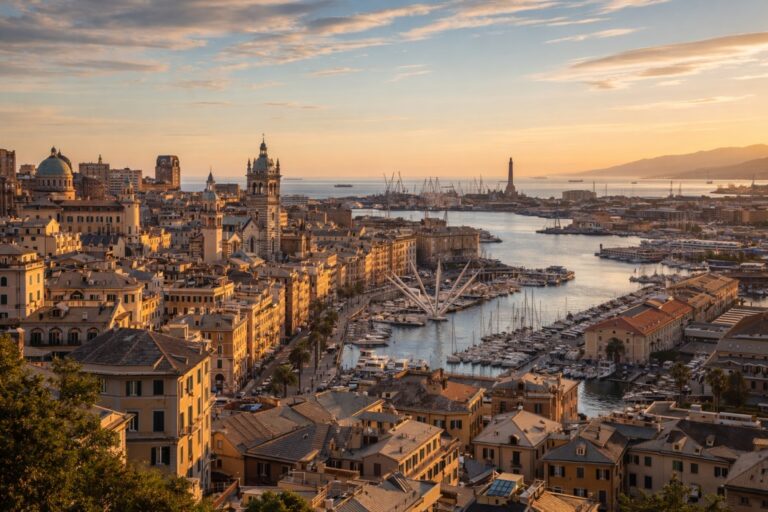
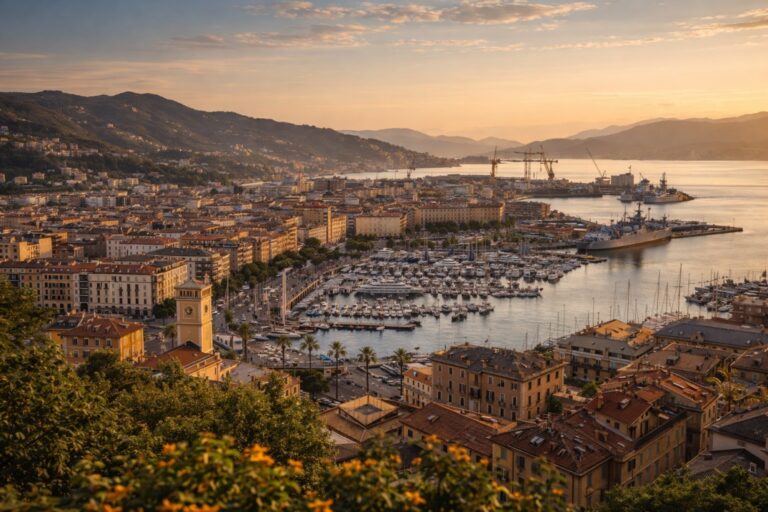
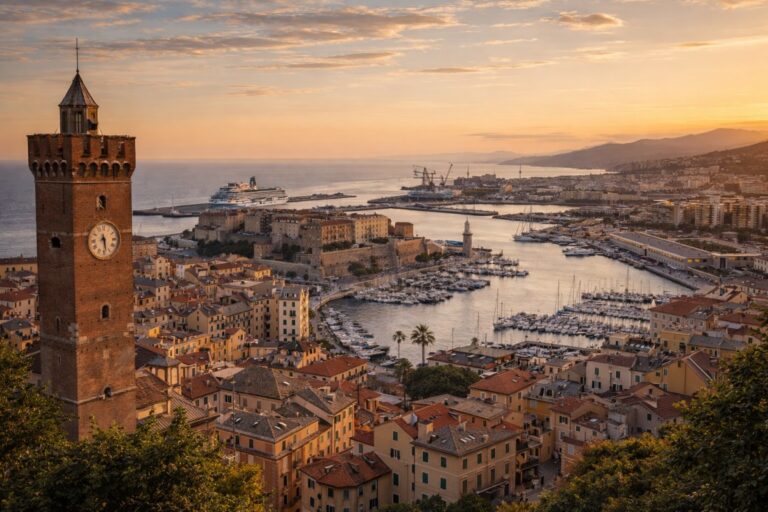
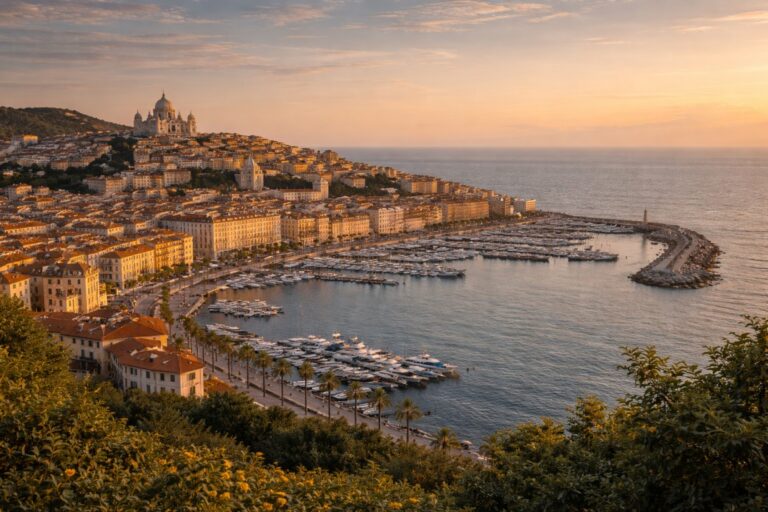
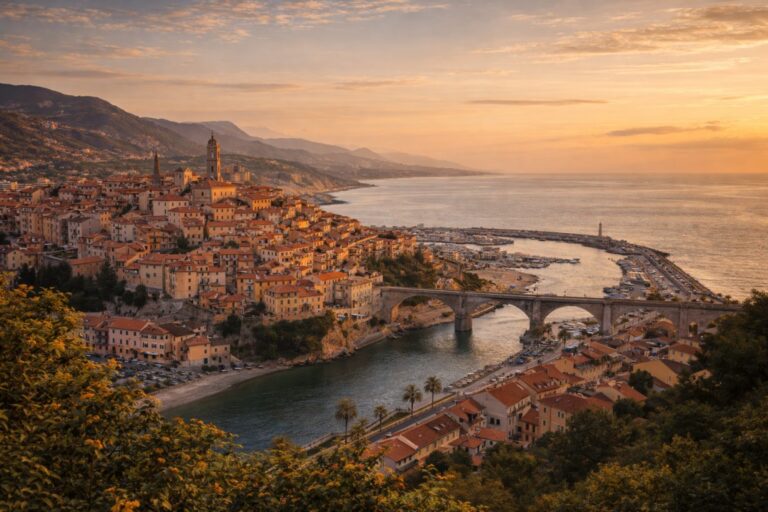
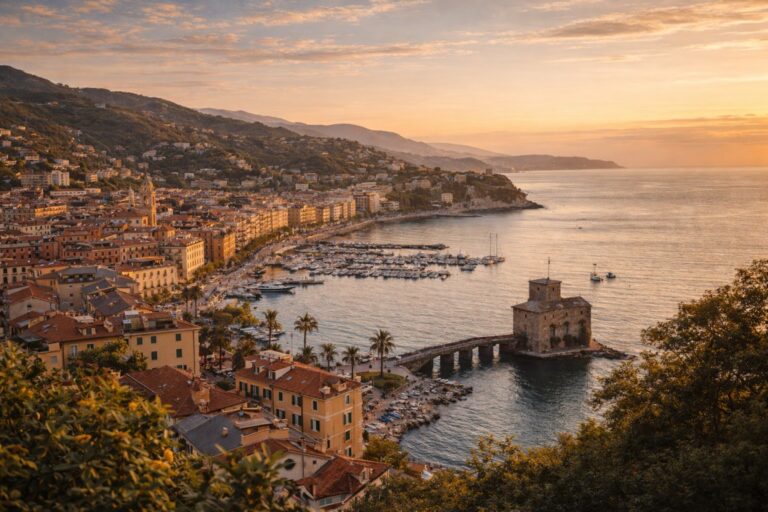
Distinct Territories within Liguria
Tigullio (Chiavari–Lavagna–Rapallo corridor)
Ponente dei Fiori (Imperia–Sanremo–Ventimiglia border belt)
Coliving Reality Check
Coliving in Liguria fits small, disciplined coliving pods. Three to eight people who accept compact routines, shared kitchens, and vertical living often integrate well.
It misfits those expecting large common areas, abundant housing stock, or effortless logistics. The region does not absorb disorganization easily.
The watch-out is housing dependency. Purpose-built coliving supply is limited; success depends on securing the right apartment and understanding how to choose housing in steep coastal towns.
Fit: Small, intentional groups who accept compact space and structured routines.
Misfit: Anyone expecting large common areas, abundant housing choice, or effortless logistics.
Housing quality defines everything — layout, noise, light, humidity, and slope are not secondary details.
Coliving in Liguria works when intention replaces space.
Discover Coliving in Liguria
Explore Other Regions in Italy
See how other regions compare in lifestyle and pace.
FAQs
Is Liguria practical for a long stay without a car?
In the main coastal corridor, yes — trains cover many daily needs. But vertical streets and grocery logistics remain friction points. Inland living becomes restrictive without a vehicle, especially for evening flexibility.
Where are the best places in Liguria for remote work?
Genoa offers the strongest infrastructure. La Spezia balances practicality with inland escape. Tigullio towns work if you manage summer housing pressure. Your tolerance for space compromise should guide the choice.
What’s the hardest adjustment when living in Liguria?
Not distance — friction. Parking, stairs, limited square meters, and humidity shape daily routines. People who thrive simplify movement and think in stations rather than neighborhoods.
Is coliving in Liguria well developed?
Purpose-built supply is limited compared to larger regions. Most long stays rely on shared apartments. Layout, noise insulation, and light matter more than branding or community programming.
What is winter like for remote work in Liguria?
Temperatures can be mild, but shade and humidity affect comfort. Indoor setup becomes critical: heating quality, insulation, and airflow determine whether winter feels productive or draining.